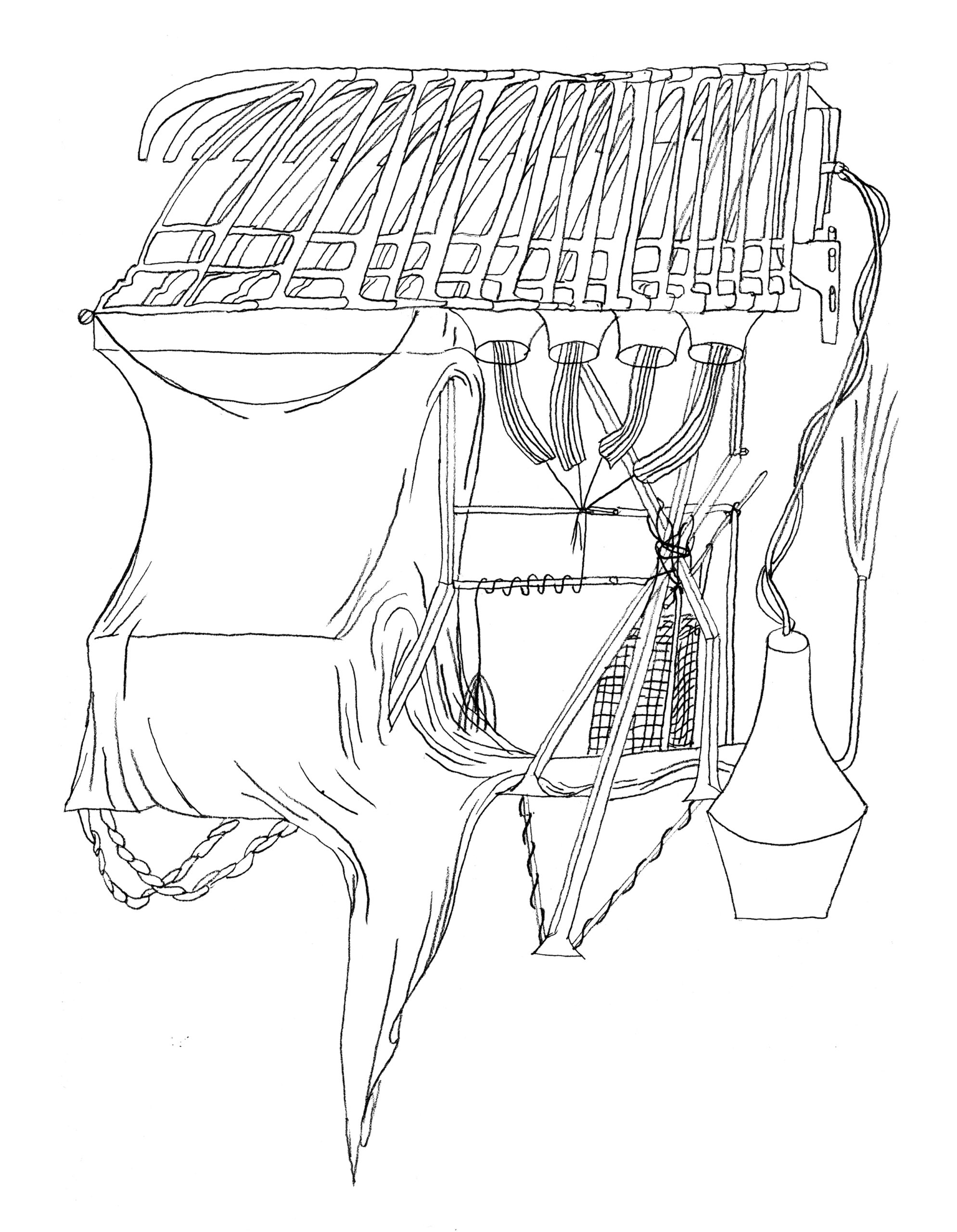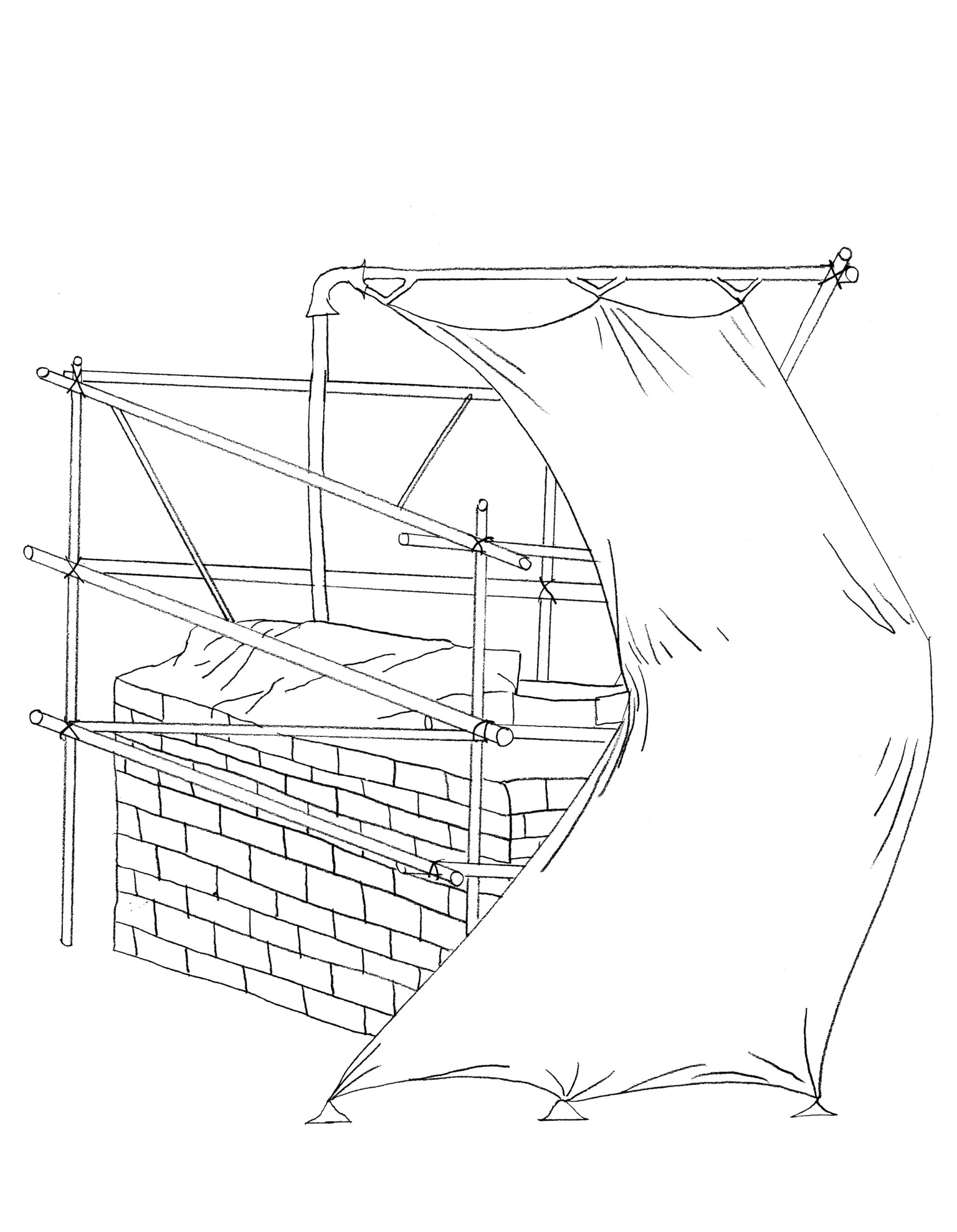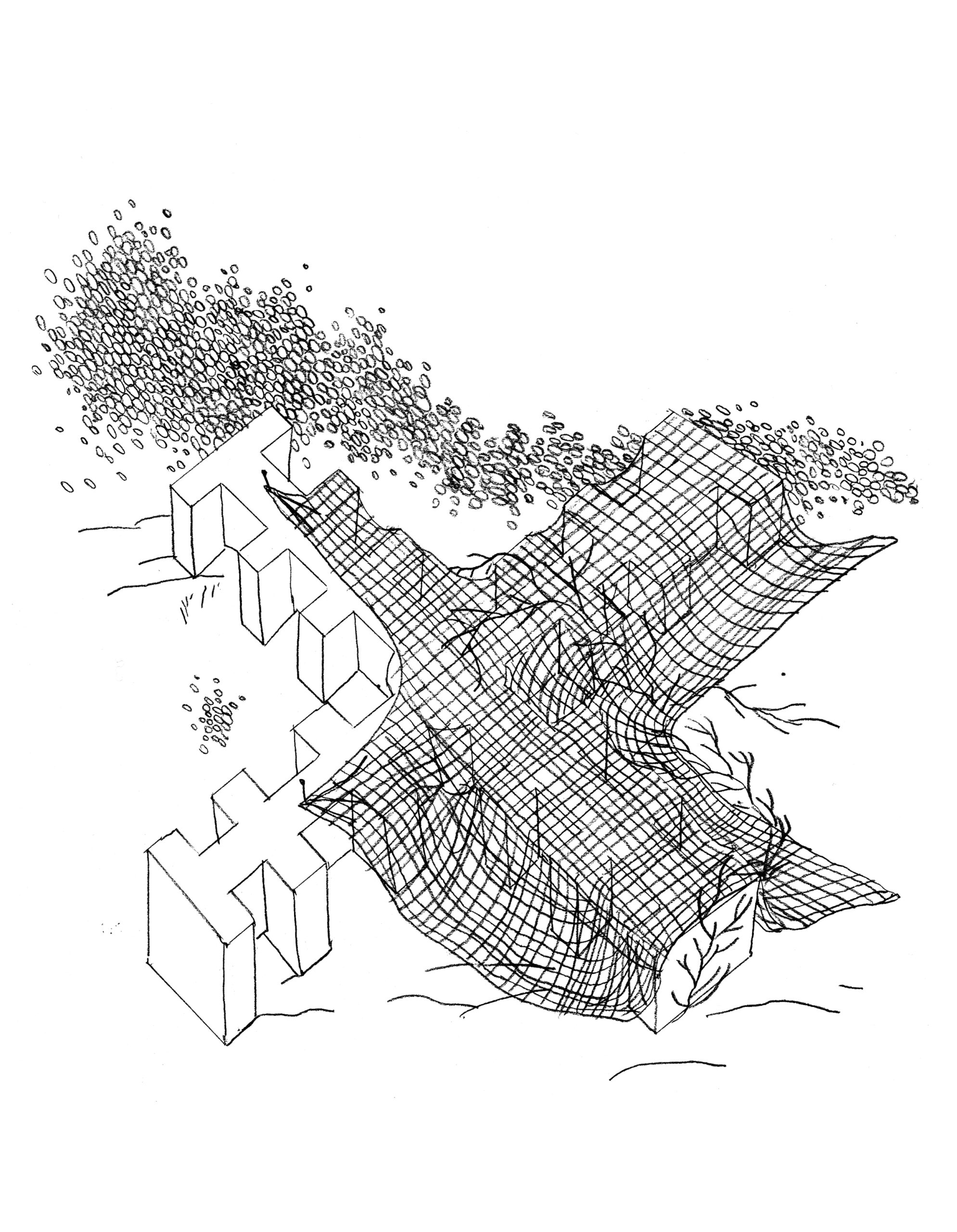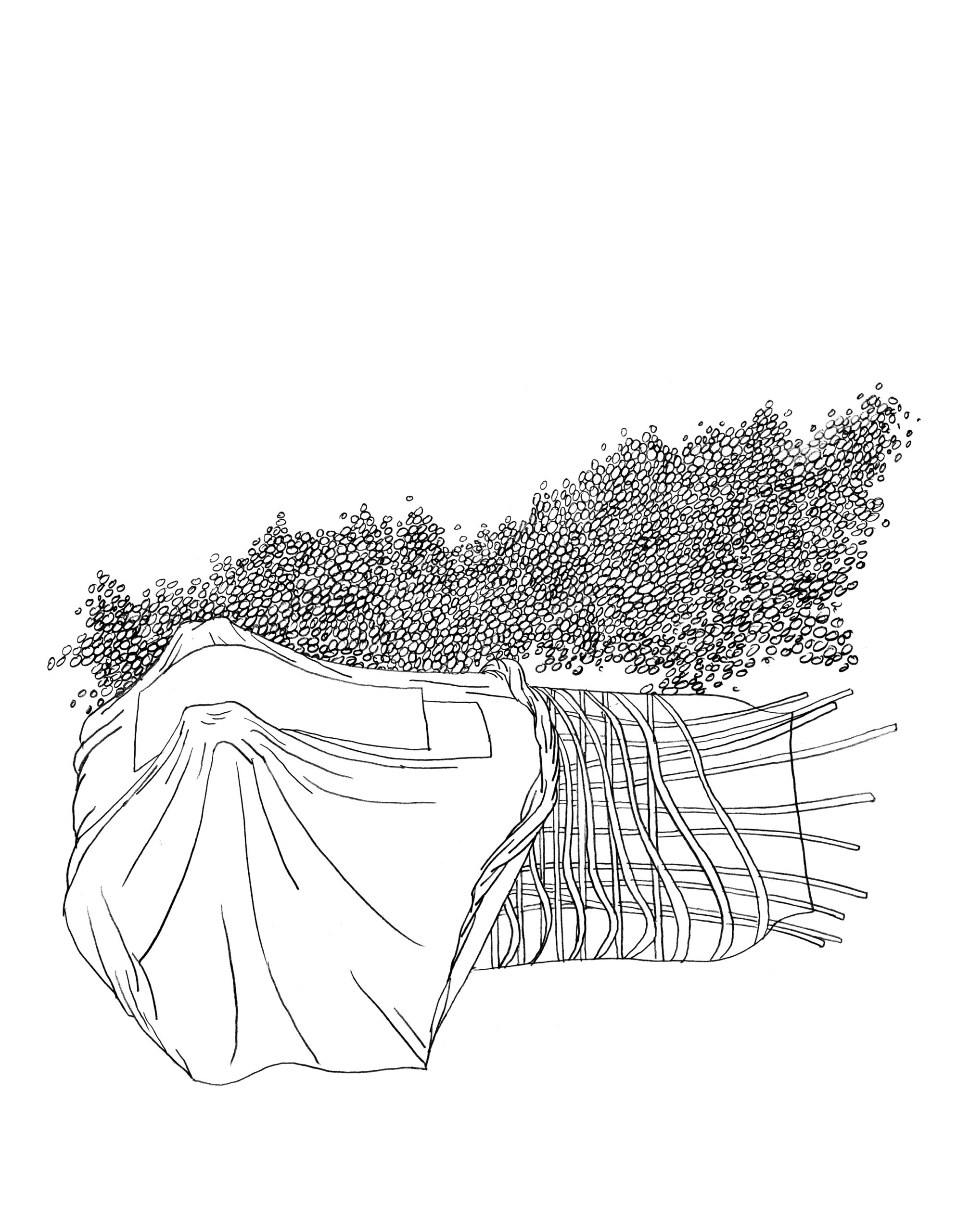
The following paper analyzes three architectural manifestos from the 20th and early 21st centuries: Le Corbusier’s Towards a New Architecture, Ant Farm Collective’s Inflatocookbook, and the more recent Speculative Everything: Design, Fiction, and Social Dreaming by Anthony Dunne and Fiona Raby. Our approach to the texts uses a preliminary conceptualization of “capitalist modernities”. The paper argues that capitalist modernities are not a mere aesthetic style or monolithic historical period but a continuously evolving, self-critical sociocultural condition that propels architecture’s evolution and its socially oriented conscience. To maintain its modern character, new architecture engages in political critique, prompting professionals to shift from practical concerns towards more imaginative and speculative applications of architectural knowledge. By tracing this trajectory, the paper emphasizes the persistent struggle within architecture to assert political agency amidst the forces of modernities.
Introduction: The modern age, political architecture, and manifestos
Le Corbusier, in his Toward an Architecture, clari-fies right from the beginning that this “new” is “mod-ern” and is related to a generalized modern sociality:
“Modern life demands, and is waiting for, a new kind of plan, both for the house and for the city.”
Addressing the history of 20th-century modern architec-ture, it is impossible to ignore its social and thus political dimension. Its emergence occurred in a context of indus-trializing societies, from the 19th century onward, growing increasingly complex, volatile, and interconnected. Archi-tecture was pressed into alignment with the new social and economic necessities of functionality, speed, and productiv-ity that gained central social importance. From a discipline once preoccupied with stylistic expression and the shaping of buildings to fit specific social actions, architecture be-came increasingly entangled in projects on vast scales, in parallel with the expanding scales of all social phenomena. In this context, the distinction between disciplines start-ed to blur, since these necessities and their corresponding systems became interdependent: architecture, engineering, and industrial design of production machines or consumer goods all started to co-evolve into an increasingly intercon-nected, epistemologically functionalist whole. This complex entity progressively came to encompass society, where it was perceived as a facilitator, presupposition, mediator, and limitation to human relations, needs, and desires. Architec-ture and engineering, being they were directly associated with this expansive socio-technical whole, thus became de facto political. In its modern 20th-century conception, archi-tecture was viewed as a discipline of a society “becoming infrastructural”.
Nevertheless, through political and social sensitivity, architecture found a meeting point and common denomi-nator with another politicized artifact, likewise a product of these new social conditions. This was the “manifes-to”, both as a literary genre and as a printed, distributed object. Manifestos first appeared at the end of the 17th century, initially meaning “a conspicuous declaration”, usually issued by the ruling authorities. With the expan-sion of more efficient typographic technologies, however, manifestos evolved into declarations of a cause, texts explaining complex subjects and motives to the masses. They had the double function of not just announcing an already existing movement but also bringing it into exist-ence.1 Architectural manifestos, in this respect, explicated the new social conditions that challenged established architecture of the early 20th century, yet equally served, as modern, designed products, as themselves an aesthet-ic, communicative, and textual challenge to established dogmas in architecture, its social role, and its textual representation. Manifestos were becoming architectural objects in their own right, aspiring to transform architects and urban planners into a modern, distinct social group. Hence the initial objective of a new architecture became the publication of an architectural manifesto.
It is in this background that I sought to explore the shifts and deviations of Western architectural thought in the last century by examining three exemplary archi-tectural-technological manifestos: Le Corbusier’s Toward an Architecture, especially the last essay “Architecture or Revolution”, Ant Farm Collective’s Inflatocookbook, and Anthony Dunne’s and Fiona Raby’s Speculative Everything. What I intend to show is the specific shifting relation of architecture to modern politics and especial-ly the emancipatory variant of politics, as opposed to a broad genealogy of recent architectural variations that, as expected, are innumerable. I argue that a trajectory of progressive withdrawal of architecture from applicable building practice to speculation can be traced through these cases, resulting from the socio-political causes of modernization. More specifically, I argue that these shifts transpired in parallel with the phases of architectural practice’s subjugation to modernizing (and specifically capitalist) imperatives experienced by successive gener-ations of architects. As such, this is not to say that the act of architectural speculation is a recent phenomenon entirely stimulated by this process; indeed, speculative projection, merging technical and social discourse, has always been an integral part of architecture. More likely, I intend to highlight that due to progressive capitalist subsumption, a specific form of modern architectural speculation arose that gradually divorced itself from any intention of implementation. Rather, its implementation was – and remains – precisely this act of pure speculation. Nevertheless, in this context, the term modern should not be taken as a given. As I will show, “modern” or “moder-nity” is not a monolithic historical period or aesthetic style, but constitutes an evolving social condition.
Troublesome (Capitalist) Modernities
Definitions of what it means to be modern vary signif-icantly. In what follows, I shall avoid extremely rigid definitions of modernity, such as that of Giddens, and elaborate a more flexible and productive approach. Here, I draw on approaches to modernity characterized as crit-ical temporal or as sociologically oriented. According to Goran Therborn, modernity or modernization, despite its various usages, can be interpreted as a future-orient-ed socio-historical temporality and mentality, a heter-ogenization of social forms, and a dynamic process of progressive renewal of society. Nevertheless, this wide definition is articulated differently across various social and temporal contexts, and what is meant by “progressive renewal” varies significantly.2
This future-oriented mentality became intellectually and culturally possible within the historical domain of the first phase of the industrial revolution and the expansion of the socially dynamic mode of capitalist production, a force integrating, disintegrating, and transforming the social nexus. While its initial phase was a product of coincidental historical circumstances in Britain, over time it became a shared social experience in what became known as the capitalist occidental part of the world. A wide range of social thinkers since then have acknowledged the double, contradictory character of this process: in social terms both creative and de-structive, both uplifting and deteriorating.3 Empirically, especially in terms of urban life, this was expressed by the simultaneous vitality and enchantment of urban life in contrast with its sharp class divides, the slum conditions, pollution, and urban alienation of the early modern city of the 19th and early 20th centuries. Marx, along with most of his followers, attributed this dou-ble character to capitalism’s contradictory productive process. Others more reform-oriented and policy-ed-ucated, such as the German tribune socialists or the Fabians in Britain, emphasized instead the role of so-cial antagonism, attributing the destructive tendencies of modernity specifically to the laissez-faire market regulations. A common approach for many theorists and even literary authors and novelists of the time in Europe, this latter stance remained positive towards the potentially beneficial use of the forces that modernity had unleashed if they were used rationally, guided, and regulated. Modernity for them was twofold, both rational and irrational, and a conscious path could be paved for the former. Modernization, in this sense, was a dream of a progressively better future amid a sea of troubles and changes that this very process instituted. From the very onset, this dialectic indicated an inherently unsta-ble and evolving sociality, renewed by novel tenden-cies that function as its internal, epochal critique. As Marshall Berman put it, “You cannot step into the same modernity twice.”4 Thus we are talking about (capitalist) modernities, especially in the occidental world, and not a single, universal modernity. Even if modernity (and modernization policies) was a common experience, its goals, reactions, and manifestations vary according to circumstances. Of course, the corollary is the existence of other modernities in other parts of the world, which need not be strictly capitalist in the narrow sense of the word. These are out of the scope of the current essay.
Three Modern Architectural Manifestos
Many innovative and socially receptive architects around the turn of the 20th century were also inclined to believe in an essentially regulative approach toward modernity. Le Corbusier definitely can be assigned to this category. He was not by far the first to address the challenges raised by the contradictions of modernization toward societies and the potential socially oriented role of architecture: his predecessors included Jean-Baptiste André Godin, Tony Garnier, or Petrus Berlage, just to name a few.5 In central and eastern Europe, the Soviet-German connection was also quite vocal about these new developments, and Le Corbusier had good knowledge of their work.6
Le Corbusier – Toward an Architecture (1921)
Le Corbusier’s novel contribution is that his Toward an Architecture (1921) forms the first expression, in an explicit and systematic way, of how modern politics and social conflicts affect architecture. Modern [new] architecture is not [only] novel because it is the adequate product of new social needs and ends. It is a social force itself that is summoned to guide this modernization rationally. Le Corbusier, in publishing Toward an Ar-chitecture, aimed not only to declare and analyze a new, adequate architecture for the world, but actively sought to transform architecture itself through the publication as a designed book-object. As such, the publication of the text is par excellence a manifesto. The publication of Toward an Architecture represents the first instance of this new architecture, an architecture for the masses and their needs.
New, modern forms of social engagement, according to Le Corbusier, have only been addressed by architec-ture in relation to immediate economic imperatives. This for Le Corbusier is scandalous, and on this issue, he follows the concerns of many of his contemporaries. The danger of a violent revolution arises because of social disintegration under the forces of modernity: Le Corbusier openly acknowledges modernizing processes, especially rapid urbanization and industrialization, as having a negative social impact. As such, he focuses mainly on challenges faced by the naturalized, heter-onormatively depicted social role of the family. Spe-cifically, as articulated in the last essay, the destructive, irrational aspects of modernization restrain families from achieving their fulfilling and socially productive role as the nucleus of procreation and compromise their ability to enjoy modern amenities.

“The machine that we live in is an old coach full of tuberculosis. There is no real link between our daily activities at the factory […] The family is everywhere being killed and men’s minds demoralized in servitude to anachronisms.”7
This discrepancy raises the possibility of a political revolution, a term deployed at the end of the text in its most specific sense as a violent uprising against the estab-lished political order. If architecture and engineering have facilitated only the socially destructive, profitable aspects of modernity, for Le Corbusier it is a mark of irrationality, one that demands to be addressed by a “revolutionary”, guiding, new architecture. Thus, new architecture appears to have a double meaning, as if it cannot escape the dual-ity of modernity. It is both a revolution and a remedy to revolution, according to the very definition of the term given by Le Corbusier in the text:
“In every field of industry, new problems have pre-sented themselves, and new tools have been created capable of resolving them. If this new fact is set against the past, then you have a revolution.”8
Le Corbusier views the modernizing world as a case of extensive infrastructuralization. The infrastructuralization of life, the acknowledgment of the increasing scale of social issues, the common denominator between social control through state regulations intended as prediction, and architecture’s practice of projection and speculation, made architecture and policymaking (mostly through the state) almost synonymous. “Architectural statecraft” as the planning of both public space and social practices was Le Corbusier’s conception of a redeemed modernity, a link-age maintained throughout his life. He vividly demon-strated this as well by his frivolous, incidental apprecia-tion for state authoritarianism. As such, it can be argued that Le Corbusier in “Toward an Architecture” conceives everything dualistically: modernity is both rational and irrational, architecture is both technical and socio-political, and revolution is to be desired and avoided:
“The machinery of society, profoundly out of gear, oscillates between an amelioration of historical im-portance and a catastrophe.”9
Le Corbusier’s modern notion of architecture as a ra-tional discipline was equally expressed in a skillfully visual way by the strict, ordered outlook of the manifesto as a designed object. The often surprising juxtaposition of designed items, such as cars and locomotives, with ancient monuments points to the fact that new architecture is not a transcendental value but a product of a historically specific standard. The modern Parthenon is the high-rise building or the railroad. The historical specificity and the interlocking of various designed systems of life also unite the disciplines of industrial design and architecture, since both processes entail the creation of functional objects for the masses.10 The house (and by implication also the city) is “a machine for living”.11
Nonetheless, Le Corbusier avoids fully conflating the two, since he acknowledges the issues of scale. Accord-ingly, and this is of pivotal significance, as many com-mentators argue, Le Corbusier does not only promote a functionalist and rationalist view of architecture: there are points in his argument where he implies that this ra-tionalism, if it brings harmony between functions, social relations, and needs, also acquires aesthetic and value.12 What allows rationalism, functionalism, and aesthetics to intersect is architecture’s ability to project, plan, and speculate relationships and connections between items in general. This is the reason why architecture is called to play an elevated role in modern politics. A new architec-ture is more than an applied discipline: it is a policy, and a harmonious policy is aesthetic. Politics should become architectural, according to Le Corbusier, and this also has a sentimental value. As he repeatedly states:
“Architecture is the art above all others that achieves a state of platonic grandeur, mathematical order, speculation, and the perception of the harmony that lies in emotional relationships. This is the aim of architecture.”13
This prompts the conviction, both socially and profes-sionally, that architecture has its clear socio-political sig-nificance, drawing a distinction between a possible “soft” (architectural) and a “hard” (political) revolution. Like most – but not all – of the thinkers of his time, Le Corbusier sides with the soft one. He tightly combines large-scale planning and speculation in all domains as the proper intellectual means for a better future social system: the “modernity of the plan” and its appropriate, harmonious architecture. These socio-technical means were born out of the same modernity they meant to transcend, and architecture was to serve as a common language among them.
Ant Farm Collective – Inflatocookbook (1971)
Ant Farm, an avant-garde architectural collective in the late 1960s in the USA, belonged to a larger American and European tendency of neo-avant-gardism, also known as radical design or radical architecture, in the late 1960s that aimed to redefine the relation between architecture and politics.14 Similar groups of this time, like Superstudio, Archizoom, or Haus-Rucker-Co., arose within a historical context where the hopes for Le Corbusier’s modernity had faded away: WW2, the horrors of nuclear weapons and the Cold War, environmental pollution, and the increasing realization that the “architectural statecraft planning” envi-sioned by the generation of Le Corbusier had not resolved industrial or capitalist discontents.15 Planning had either achieved poor results or directly contributed to the ration-alization and reification of social injustices. Surely, there were fewer slums and better living conditions, but life was becoming progressively incorporated into globalized cap-italist imperatives, business interests, and conservatism. Traffic was devouring cities; Robert Moses and similar modern architectural figures around the world, both in its colonizing and colonized parts, were reshaping public space in profoundly undemocratic and homogenizing ways. Modernity in the late 1960s seemed like a body where any remedy for a wound would imply the inflicting of two new ones. In this Faustian social condition, any egalitarian or emancipatory promise of modern architecture of the interwar period, as propagated by CIAM and its branches, had been completely subjugated to immediate utilitarian, homogenizing, and standardized economic or military im-peratives, forming an overreaching infrastructural system. Consequently, Ant Farm was part of an architectural tendency that responded to a pressing cultural demand for heterogeneity, autonomy, and mobility.16 The encom-passing rigid architectural and infrastructural grid de-veloped economically and institutionally in the 1960s in Europe and the USA had acquired the image of a “systemic objective whole”. As such, Radical Architecture and Ant Farm, particularly in the USA, acted as a rebellion of the subjective and the partial against this supposed systemic objectivity. This development had its counterpart in their contemporary political philosophical Zeitgeist. Thus, around the late 1960s, the perceived contradiction of mo-dernity was not between irrationality and rationality but between sedentary, planned modes of living and mobile ones. In the urban context, this new dichotomy was demon-strated by the contrast of the building, the public space, and the road with the increased vehicle traffic. In politics, advocates of regulation and planning faced the slow but steady rise of neo-liberal deregulators. In modes of life, there were the less mobile blue collars and the rise of the more socially and geographically mobile white collars.

In their manifesto Inflatocookbook (published as a DIY booklet in 1971), the Ant-Farm collective envi-sioned a light, mobile, easy, and playful architecture. Avoiding the exhausting rationality and the seriousness (already perceived as masculine) of steel and concrete, it was a rebellion of small-scale mobile-designed objects versus the large scale of architectural statecraft. If for Le Corbusier the large-scale plan was the solution, now this was an architecture of the small scale and the relatively unplanned.17 It didn’t require a lot of capital investment; it didn’t even require architectural knowledge. A brochure could do the educational work just fine. In Inflatocook-book, we have an architecture of inflatable objects made of light polyethylene. It was an architecture that could be decomposed, packed, and unpacked in a van in a DIY manner.18 Accordingly, Ant Farm (and the Radical Ar-chitecture and Design tendency that they represented in the USA) converged architecture even more with object design, since their proposal was based on small, multi-functional parts. The ideological attitude underlying these conceptions was an enthusiasm for car-powered nomad-ism19 and the abolition of anything top-down and stable:
“To unfold, to inflate, and to see each other in a black, white, red, and purple cloud balloon can (conditions right) help to break down people’s category walls about each other and their own abilities and can be a hint at the idea that maybe, maybe anybody can and should take space-making and beautifying into their own hands.”20 or “that the world’s biggest snake [an allegorical depiction for all inflatable objects of Ant-Farm’s architecture] eats video screens, blows up buildings, destroys Fat City, builds real (C)ity, solar energy, dreams, enviroy-esterday mobiletomorrow AND We give 10 X energy credits with fill-up”21
Language and vocabulary are employed here quite differently from Toward an Architecture. The language of this manifesto is playful, and its idiosyncratic style is less serious and organized, expressing discursively an opposition to order and seriousness. The nuanced ne-ologism of “her, his hands” already implies a departure from a standardized masculine discourse. The following pages of the manifesto are totally devoid of any large-scale, applied plan. There is no ordered layout but scattered fragments of texts, memoirs, and jokes about architecture, juxtaposed with detailed manuals of how to use polyeth-ylene. Most of the textual fragments indicate recreational usages. The pages are filled with inflatable object-buildings that, though functional and constructable, are temporary and small-scale, flexible edifices that look like funny ani-mals (a snake, a turtle). Thus, one considerable difference from Le Corbusier’s era is the intention of its discourse and the condition of the manifesto as a designed object itself: facing an increasingly rigid social condition, archi-tecture’s textual and visual speculation gained a relative autonomy from the utilitarian projection of functionalism. Ant Farm’s manifesto proposes an architectural indetermi-nacy, actualized by its (relative) decoupling of speculation from systemic, applied, large-scale planning.
This difference also indicates another considerable gap between Le Corbusier’s and Ant Farm’s modernity: the gradual formation of a sense of escapism. While for Le Corbusier, the forces and the aim of a new, modern architecture are to place us firmer within modernity, Ant Farm is driven by a sense of asphyxiation by the “modernity of the plan”. Mobility, for them, is a form of “unplanned architecture” that constitutes a “pasto-ral”, a pure place (implied also as being away from the big city) less subjugated to the forces of the plan and its connotations. This pastoral can be either freely ap-propriated or function as temporal heaven. Furthering this escape is their humorous depiction of architecture: a van with inflatable objects stops at a campus to func-tion as a nomadic and temporary safe place,22 a portal to a network of like-minded initiatives, or an imaginary scenario where students are invited inside an inflatable polyethylene dome to find refuge from toxic pollutants in the air.23 Their architecture and its visual language are focused on an “insularity and isolation” from the outside – or in their terms the “Real (C)ity”. Ant Farm conceives a mobile, anarchic modern architecture.
A common thread linking Le Corbusier with Ant Farm, despite their highly evident dissimilarities, is their belief in modernities as a dynamic dialectic. Modernities negate themselves and are recreated, renewed by innovative ten-dencies that function as an internal, epochal critic of their historically prior form. As such, the two stances still shared the belief in architecture’s pivotal political role as a force of social change, and in the liberating qualities of new materi-als and technologies. Both standpoints deliver “New Archi-tectures” through a strong belief that the materials created within these conditions have the potential to transcend them.
Anthony Dunne and Fiona Raby – Speculative Everything (2013)
Speculative Everything, a manifesto-book by the UK de-signers Anthony Dunne and Fiona Raby, addresses the broader concern among architects and designers regarding the complete subjugation of their profession to capitalism,24 engaging with issues such as product design, architec-ture, and futuristic scenarios of living beyond contempo-rary capitalism. To understand Speculative Everything, it should be recalled that another 40 years have passed since the 1970s. The mobile pastoral freedom of the no-mad groups like Anti-Farm and Archizoom proven itself just as easily integrated to capitalist imperatives as Le Corbusier’s rational modernism. Or as equally destructive: pollution of microplastics, the rise of automobiles, and the highway. The rise of neoliberalism, digitalization, and the deepening of the mobility discourse in the 1980s and 1990s demonstrated that instead of liberating, they entangled capital and statecraft with almost every aspect of life across the globe. Considering the specific British context, there was also the evident failure of influential local architectural and urban planning approaches aiming toward social sensitivity.25 Schools such as the Garden City movement and its semi-modernist, state-driven post-war implementation in the form of the New Towns program, the MARS group’s modernist approach of council housing, or Archigram’s radical, mobile design had all notoriously de-livered nothing beyond architectural and urban results that served Britain’s declining imperial post-war welfare capi-talism or its neo-liberal reconstruction.26 It is against this background that we should read Dunne and Raby’s work: tellingly, they begin with Fredric Jameson’s known dictum that “it is easier to imagine the end of the world than the end of capitalism.” As such, they suggest that it is time for a radical readjustment of the relation between architecture, design, and contemporary political thought.
If Ant-Farm and the Radical Architecture movement were preoccupied with novel methods of visual languages and applied nomadic architecture, now under the light of a supposedly total subjugation of architecture and design to capitalism, the urge for escapism becomes the dominant axis around which architectural thought evolves. Architecture, to achieve its liberation and regain its freedom as a discipline, fully escapes to the imaginary. Speculative Everything is how architectural thought looks under conditions of “everything capitalist”. Right from the start, Speculative Everything declares its radical political purpose: on the one hand, to rehabilitate a socially sensi-tive and emancipatory architecture, liberated from cap-italist imperatives; on the other hand, to use design and architecture as means for social emancipatory critique:
“For us, this separation from the marketplace creates a parallel design channel free from market pressures and available to explore ideas and issues. These could be new possibilities for design itself; new aesthet-ic possibilities for technology; social, cultural, and ethical implications for science and technology re-search; or large-scale social and political issues such as democracy, sustainability, and alternatives to our current model of capitalism. This potential to use the language of design to pose questions, provoke, and inspire is conceptual design’s defining feature.”27
As such, “Speculative Everything” declares its purpose to be utopian: “To measure the life ‘as it is’ by a life as it should be (that is, a life imagined to be different from the life known, and particularly a life that is better and would be preferable to the life known) is a defining, consti-tutive feature of humanity.”28
Utopia, here, means the exploration and projection of future scenarios and their consequences. Modernity from the turn of the 20th century had an intimate relation to uto-pia, quite vivid in Le Corbusier’s generation of architecture, politically spanning the gamut from the early Soviet visions to the “Futurama” of General Motors in 1939. Textually and visually, they explored a sense of a better future, even if the referent of this “better” significantly diverged. Once these aspirations were shattered, utopia became categorized under the notion of “everything unrealizable” or, even worse, as realized plans that ended up authoritarian.29 Speculative Everything thus strove to rehabilitate utopia as an integral part of a socially sensitive architecture. Since Dunne and Raby’s strategy is to escape into the sphere of pure specula-tion, any relation to an applied scale vanishes. Accordingly, their inquiry primarily addresses scaleless objects, thus collapsing architecture and product design into one unified exploration of imagined social implications.30 “Speculative Everything” is the maximum decoupling of speculation from applied planning. Yet in parallel, such a maximization also indicates the totalization of the performative force of the architectural text. An architecture totally decoupled from its applied dimension becomes a pure manifesto, transforming Speculative Everything into the maximum “manifestoza-tion” of architecture and design. Despite living in an age “disgusted with manifestos”, the socio-economic conditions are favorable; we are in the golden age of manifestos.
Speculative Everything does not aim to implement its utopianism and does not interpret utopia as a complete plan. Conversely, urbanism, architecture, and design are under-stood as layered phenomena that, besides their material arrangement, need for their functioning to be interlocked with various symbolic, legislative, and habitual practices. For example, a city is not just the visual appearance of its buildings and squares, but a set of human practices that construe its meaning, its potentiality, its allowances and prohibitions, and its appropriate and inappropriate uses. As such, it aims to construct an extra layer, the layer of specula-tive design that provides a point of view to a desired reality different than the purely utilitarian ones. This is done by two century-old strategies of visual language: an apposition of intellectual champions who managed to imagine radically different configurations of societies and their relationship to the built environment, and a process of defamiliarization. The first category includes, in fact, the Radical Architec-ture movement of the late 1960s, featuring groups such as Ant Farm, Archizoom, and Haus-Rucker-Co, as well as the Italian architect Ettore Sottsass and sci-fi/alternate history authors like Philip K. Dick and Ursula K. Le Guin. What unites all these figures, especially those associated with the visual, is their strategy of de-familiarization. They offer a juxtaposition of text, objects, buildings, designed items, and settings, formulating a visual strategy of “what if” to-ward the other layers (material, symbolic, habitual, etc.) of designed environment and social realities. Text and image gain a prominent role to explicate new socio-architectural tendencies, and at the same time, they become the exclusive incarnation of these tendencies.

Dunne’s and Raby’s axiom that “the problem begins when utopia goes to the market”31 has significant consequences: there are no simple solutions, no easy exit routes. It is not enough to be a nomad, to have a van, to draw in a radi-cal new visual language. Speculative Everything indicates that many steps need to be taken to create an alternative. The intellectual distance from the given social reality that Speculative Everything poses is the same distance that the current society has to cross for any radical resolution of its issues. As such, it claims that a better future, with an emancipated society and an architecture that plays an active role in it, can only emerge through deep changes at every social level. Consequently, architecture achieves emanci-pation by unburdening it from its role as an instrument of applied planning in the context of capitalist modernities. The political impasse of architecture’s subjugation to capital is not an architectural issue itself; it cannot be resolved by architectural means. As a result, architecture ceases to be an absolute discipline, a solution to almost any problem. Such a conclusion, philosophically, has come a long way since Le Corbusier’s conception, yet exactly because of this critical evolution, it’s still modern, a “new New Architecture”. Nevertheless, Speculative Everything and its proponents share some commonalities with Le Corbusier’s approach to architecture. The intellectual leap of faith into a total-ly speculative realm may seem groundless, privileged, or a mere aestheticization of our present social condition. Indeed, such criticism has been uttered and not without reason.32 However, this qualitative leap paradoxically re-es-tablishes one quality of early modern architecture as seen in the works of Le Corbusier that has been lost over time. Total speculation and the negation of immediate appli-cability enable a re-emergence of a broad range of social issues, as the barriers imposed by practical considerations are lifted – a breadth in contrast to radical architecture like Ant Farm, which had narrowed the scope of architectural social focus to a subjective micro-scale. Even if these issues are not perceived as exclusively architectural in themselves, total speculation enhances the capacity of architecture to serve as a common language through its ability to visual-ize possible relations between things. Hence architectural speculation, even by neglecting applicability, still bears significance. It allows for a connection between a multitude of domains: sustainability, environmentalism, democracy, human, non-human, and more-than-human rights, natural infrastructures, inclusivity, security, and creative freedom. This multitude of engagements and scales is not approached merely through the functional prism of engineering, but is allowed to enter the frame of discussion in its heterogeneity.
Epilogue: The Politics of One Century of Modern Architectural Manifestos
These manifestos constitute three pivotal moments of so-cial dreaming through contemporary architecture. Only a small fraction of the architectural manifestos that have been written during the last century, they represent even a smaller fragment of the shifts and mutations that architec-tural thought got through in all these years. However, I chose these three cases under the specific light of radical shifts between the conceived relationship between architecture and politics in both philosophical and visual terms. Other 20th- and early 21st-century trends, such as New Urbanism, the urbanism of suburbanization, or Critical Regionalism, even if they represented significant architectural break-throughs, constituted relatively minor shifts in terms of their relationship with politics, the state, and economic capitalist imperatives that still rested on a belief that either the subju-gation of architecture to capitalism and the unproblematic role of the state, or that this problem could be resolved by minor designing alterations. All these latter examples still rested on a philosophy of investment, planning, projection, and manipulation of the lived environment, believing that this would directly affect human behavior.33
More radical, pivotal cases that addressed the political relation of architecture and capitalist modernities, like the Situationist “Unitary Urbanism”, can be said to be clos-er to ethos of Radical Architecture or even Speculative Everything. For example, the 1953 manifesto “Formulary of a New Urbanism”34 states that “the architectural com-plex will be modifiable. Its aspect will change totally or partially in accordance with the will of its inhabitants…”, a sentiment evidently anticipates the flexible philosophy of the late 1960s. Nevertheless, this and similar manifestos were mostly short philosophical essays, thus influencing mostly certain activist circles and less the wider progress of architecture and design as disciplines. Other landmark manifestos, such as Delirious New York or the even more influential “Exodus” of the Office of Metropolitan Archi-tecture (OMA), were indeed quite radical and influential. Nevertheless, they did not initiate a different relation be-tween architecture and politics. Aesthetically, their visual language continued the Radical Architecture tradition, while politically they were much less critical of their sub-jugation to capitalism, taking the relation between archi-tecture and politics as a given at their historical moment.
Of course, the texts presented in this article are not unique in their radicality: they should be taken as exemplary cases to represent three major shifts in architectural and political thought in relation to modern “newness”:
a) the new as ra-tionalization, understood an internal part of modernization;
b) the new as a protest of subjective small scale against the rigid rationality of the “modernity of the plan” that political-ly, economically, and architecturally encompassed western societies on a large scale; and
c) the new as a rebellion of emancipatory politics against the total colonization of both small- and large-scale social processes by capital. The last instance concludes in the formation of a new layer relat-ed to architecture and urbanism, that of a holistic, critical speculation away from immediate applicability. This may seem like an intellectual withdrawal, but it seems appropri-ate for the present historical circumstances. Drawing on the remarks of Alberto Pérez-Gómez35 and Manfredo Tafuri36 that architecture under modern circumstances is forced to take either a very specific, technocratic, applicable approach or to escape progressively into speculation, it seems that pure speculation might be the most adequate haven for contem-porary, socially sensitive architecture. This is not to say, as stated at the beginning, that architectural projective specu-lation is a new, capitalist-born phenomenon: speculation has been part of Western architecture for some time now, if not always.37 Rather, under the realities of capitalist subsump-tion, at least a part of socially sensitive architecture that does not accept the current timid practices of architectural social welfare tends increasingly to explicitly state its aversion to any applicability, since application is equated with capitalism and its dead-ends. In the case of Speculative Everything and their like-minded milieu, this aversion is explicitly stated. The emergence of an architectural scene, a stage, that is for the moment purely textual and visual, remains politically purely performative; thus, it is an “absolute” architectural manifesto. This escapism represents an inhibition by which critical, political, and socially sensitive architecture reacts to the colossal forces of early 21st-century capitalism and environmental deregulation, a political and social impasse, not an architectural one. Still, speculative architecture and design hint at their implementation at some point. They imply that an emancipatory, socially oriented architecture can find full applicability, yet only in a radically different social order, an order that is yet to emerge. Until then, this will remain an architecture that mostly denies building.38
This trajectory demonstrates the historically specific strategies by which a part of architecture in the occidental world tried to regain its freedom from the instrumentality of the modern capitalist spirit. It reveals that despite the many directions that architecture followed during its entanglement with modernities, a part of it always retained and renewed a self-critical and self-reflective aspect, a trait indicative of its modern character. Yet the result was to render archi-tecture melancholic due to the loss of its ability to suggest future paths of happiness for society; in other words, noth-ing less than its ability to be political in the deepest sense, of debating and taking responsibility for the possibility of a just life. Thus, we can perceive modern architecture not as being a constant style. Its only unwavering trait is a renewing sense of internal or external critical otherness to its very presence. And it is precisely this critical modern architectural spirit, characterized by dreams of a constantly renewed, better world – from Le Corbusier to today’s spec-ulative architecture – that is so bittersweetly captured in the opening of the “Unitary Urbanism” manifesto: “Sire, je suis de l’autre pays – Sir, I am from another country.”
Dimitris M. Moschos
orcid: 0000-0002-9619-3948
Department of Social Policy
Panteion University of Social and Political Sciences 136, Syngrou Av.
17671 Athens Greece
The interrelationship between architecture, design, and the rise of the manifesto is taken here as a common product of modernity. For example, at the start of the 20th century, ships and containers were designed independently. It was in France, at the Bureau International des Conteneurs, that the first design regulations were set for containers to match ships ships, and then Malcolm Maclean in 1956 in the USA standardized a design that would subsequently affect naval cargo vessel designs and the architecture of railroad infrastructures. In Britain, the first modernists of the late 1920s were involved in both industrial product design and buildings. This correlation between func-tionality, design, and everyday massive consumption was a product and a reinforcement of an emerging public sphere. See DARLING, Elizabeth. 2007. Re-Forming Britain: Narratives of Modernity before Reconstruc-tion. New York: Routledge; This correlation along with modern printing technologies made possible the rise of the manifes-to. For a general overview of the manifesto as a modern literary item and genre, see: LYON, Janet. 1999. Manifestoes: Prov-ocations of the Modern. Ithaca: Cornell University Press.
THERBORN, Goran. 2003. Entangled Modernities. European Journal of Social Theory, 6, pp. 293–305. doi: 10.1177/13684310030063002.
BERMAN, Marshall. 1981. All That Is Solid Melts into Air: the Experience of Modernity. New York: Simon and Schuster, pp. 15–36.
Berman, M., 1981, p. 143.
FRAMPTON, Kenneth. 1992. Modern Architecture: A Critical History. New York: T&H, pp. 64–100.
VRONSKAYA, Alla. 2022. Architecture of Life: Soviet Mod-ernism and the Human Sciences. Minneapolis: University of Minnesota Press, pp. 31–70.
LE CORBUSIER. 1931. Towards a New Architecture. New York: Dover Publications, p. 277.
Le Corbusier, 1931, p. 269.
Le Corbusier, 1931, p. 271.
Architects of Le Corbusi-er’s generation were fascinated by the novel possibilities that new materials facilitated. There were specific examples of that. For example, the Crystal Palace in London was world-famous. It was made possible during the winter to enter a space that was both viewed as outside and in-doors, an early example of local climatic control. The Brooklyn Bridge was a demonstration of architecture and engineering overcoming physical obstacles. The Eiffel Tower was architectur-ally a marvel, but it contributed both to radio communication technologies and to the relation that Paris urbanites had to their city. It functioned as a democrati-zation of public aerial views, cre-ating for Parisians, for the first time, a collectively accessible, panoramic image of the city. LEVIN, Miriam R. 1989. The Eif-fel Tower Revisited. The French Review, 62(6), pp. 1052–1064. doi: 10.2307/394841.
Le Corbusier, 1931, p. 60.
JENCKS, Charles. 1977. Le Corbusier on the tightrope of functionalism. In: Walden, R. (ed.). The Open Hand: Essays on Le Corbusier. Cambridge, MA: MIT Press. pp. 186–196.
Le Corbusier, 1931, p. 112.
CYTLAK, Katarzyna. 2015. Complexity and contradiction in Central European radical architecture: Experiments in art and architecture in the 1970s. In: Gantner, M. M. (ed.). Doing and Meditating. Artistic and Curato-rial Research. Warsaw: ZACHĘ-TA National Gallery of Art,pp. 182–203.
HASAN, Zoya, Gul. 2019. “We Dream of Instant Cities that Could Sprout like Spring Flowers”: The Radical Architecture Collectives of the 60s and 70s. ArchDaily [online]. Available at: https://www. archdaily.com/880253/9-of-the-most-bizarre-and-forward-think-ing-radical-architecture-groups-of-the-60s-and-70s (Accessed: 16 May 2025).
AURELI, Pier Vittorio. 2008. The Project of Autonomy: Politics and Architecture within and against Capitalism. New York: Columbia University and Princeton Architectural Press, pp. 60–78.
ANT FARM. 1971. Inflato-cookbook. Ant-Corps, p. 35.
Ant Farm, 1971, p. 35.
It is not a coincidence that one of the few permanent “buildings” or installations of Ant-Farm is Cadillac Ranch in Texas, created in 1974. Even in a physical form, Ant-Farm avoided any utility by creating, in fact, a “large-scale” manifesto with all their familiar symbols in place: cars, Cadillacs, a symbol of the American industrial way of life, but also an actual device for mobility, buried halfway in sand.
Ant Farm, 1971, p. 7.
Ant Farm, 1971, p. 5.
Ant Farm, 1971, p. 40.
Ant Farm, 1971, p. 37; indicating that the anxieties of the post-war modernity were all rigorously present in their think-ing.
ALLEN, Laura and PEARSON, Luke, Caspar. 2017. Drawing Futures: Speculations in Contemporary Drawing for Art and Architecture. London: UCL Press.
DOWNIE, Leonard. 1972. The Disappointing New Towns of Great Britain. The Alicia Patter-son Foundation [online]. Availa-ble at: https://aliciapatterson.org/ leonard-downie/the-disappoint-ing-new-towns-of-great-britain/ (Accessed: 16 May 2025).
DUNNE, Anthony and RABY, Fiona. 2013. Speculative Everything: Design, Fiction, and Social Dreaming. Cambridge: MIT Press, pp. 6–9.
Dunne, A. and Raby, F., 2013, p. 12.
Dunne, A. and Raby, F., 2013, p. 73.
LEVITAS, Ruth. 2013 Utopia as Method: The Imaginary Reconstitution of Society.New York: Palgrave Macmillan. pp. 7–19.
Dunne, A. and Raby, F., 2013, p. 35.
Dunne, A. and Raby, F., 2013, p. 61.
WARD, Matt. 2021.A Practice of Hope, a Method of Action. In: Mitrović, I., Auger, J., Hanna, J. and Helgas-on, I. (eds.). Beyond Speculative Design. Split: SpeculativeEdu, pp. 166–202.
SORKIN, Michael. 2009. Eutopia Now! Harvard Design Magazine, 31, pp. 6–21.
Originally written in French as “Formulaire pour un urbanisme nouveau” by Ivan Chtcheglov.
PEREZ-GOMEZ, Alberto. 1982. Architecture as Drawing. JAE, 36(2), pp. 2. doi: 10.2307/1424613.
TAFURI, Manfredo. 1976. Architecture and Utopia: Design and Capitalist Development. Cambridge: MIT Press.
CHOAY, Françoise. 1997. The Rule and the Model: On the Theory of Architecture and Urbanism. Cambridge, MA: MIT Press.
ROCHE, Daniel. 2025 Marx and Degrowth Architec-ture. Failed Architecture [online]. Available at: https://failedarchitecture.com/marx-and-de-growth-architecture/ (Accessed: 16 May 2025).
DOI: https://doi.org/10.31577/archandurb.2025.59.3-4.6

This work is licensed under a Creative Commons Attribution 4.0 International License