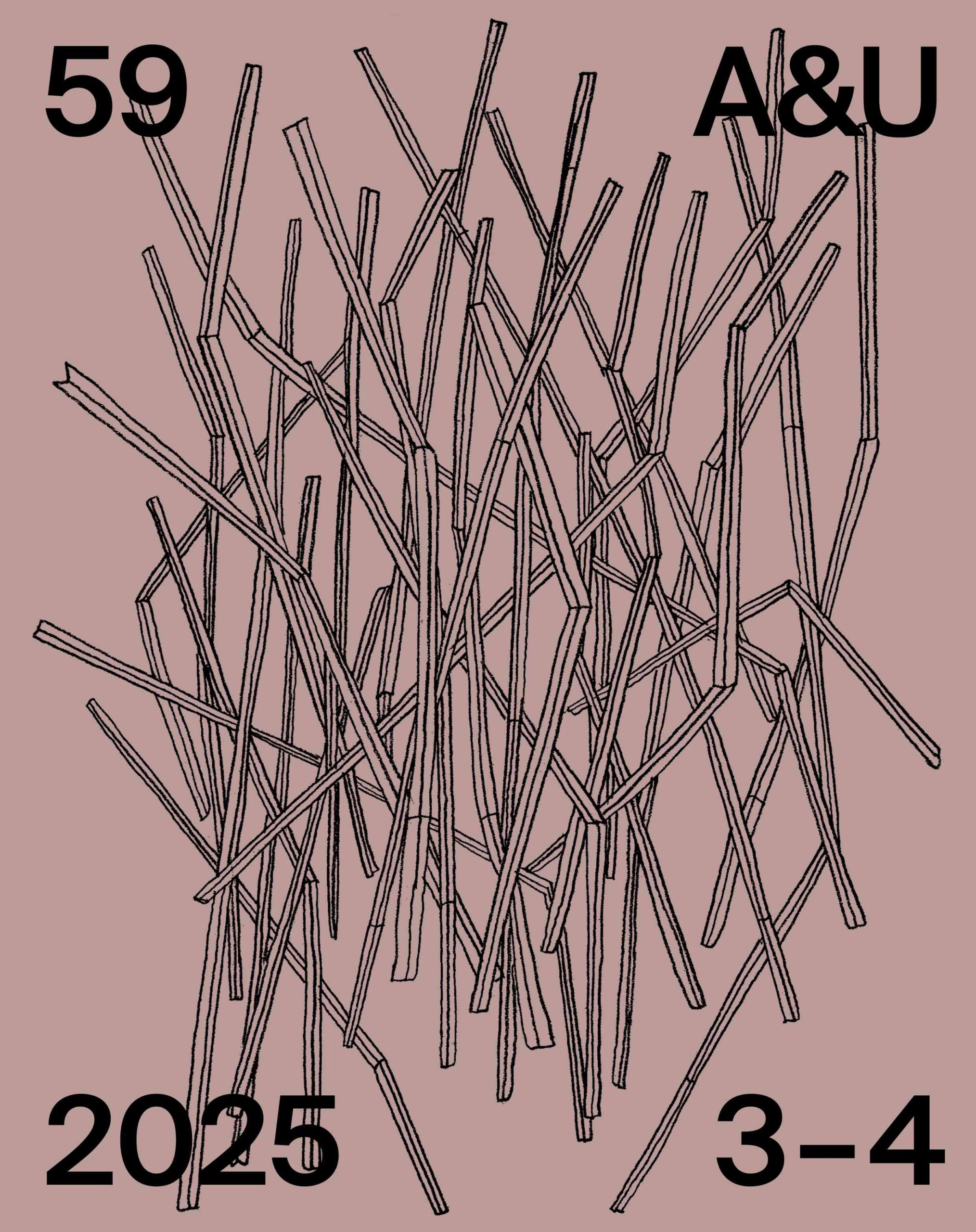
To publish a journal founded sixty years ago is a genuine responsibility. Not merely as a question of respect for its founders, all iconic figures in Czechoslovak architecture and urbanism1 – even more, as a responsibility to maintain the continuity of publishing research findings in this field, as well as a responsibility to preserve the magazine’s identity in the ever-changing landscape of academia. Amid all this, the journal should remain a meaningful and sought-after platform for the contemporary scientific community. These commitments require a continual balancing act between respect for tradition and the need for innovation.
Shaping the Focus of the Journal: Past and Present
The journal was founded at a time when Czechoslovak society was experiencing the euphoria of reform. It thus became a platform not only for publishing research findings related to local needs and issues in architectural and urban design, but moreover sought to place these topics within a broader international context. After the violent end of the reforms and the strict crackdown of normalization in the 1970s, the journal maintained its direction but confined itself thematically to the most rigid tenets of technocratic modernism. As early as the beginning of the 1980s, however, these stagnant waters began to be disrupted by the work of researchers who skilfully transcended the boundaries set by official, institutionalized science. With the collapse of the socialist regime, these islands of positive deviation shifted to the centre of the journal’s publication strategy. Like society as a whole, the journal faced the fundamental task of aligning itself with global trends – formally symbolized by a slight change to its title, replacing the Slovak conjunction a with the English &. At the same time, the journal increasingly focused on the history of 20th-century architecture and urban planning.2 Another important change for the journal was the transition to the publication of exclusively English-language texts. In the second decade of the 21st century, we abandoned the original Slovak-Czech bilingualism, which had been part of the journal’s identity for decades. Today, all of the journal’s communication takes place in English, which ensures the journal’s international connectivity, enhances its citation impact, and contributes to the internationalization of science.
A major turning point for the journal was its inclusion in the international databases WOS and SCOPUS in the early 2000s. This presence established the journal in the international arena, and it seemed that we needed only to maintain the quality of the peer review process, expand international collaboration, and – with our move to an open online platform – we would now be able to connect the global community of scientists and scientific institutions and contribute to the advancement of knowledge. However, it turned out that the world of scientific journals is far more complex, indeed largely determined by circumstances without any intrinsic link to the significance of the journal’s content for a given scientific community or for the environment in which the journal is produced. Bibliometric evaluation derived from the global databases where a journal is indexed has, over the past two decades, become not only the primary criterion for determining a journal’s quality but also for assessing the quality of the research itself. Simple database-generated numbers or categories – so-called “desktop bibliometrics”3 – have become the most important data determining a journal’s quality and, consequently, the scientific community’s interest in publishing in it.
Criteria for Evaluating a Journal in the Field of the History and Theory of Architecture and Urbanism
“These systems often present themselves as a black box: the user does not know how the results are calculated; but even simple indicators such as the h-index can be calculated in different ways.”4
In today’s global academic landscape, the impact factor is the key indicator for evaluating the results of scientific research. For non-impact-factored journals (which include most humanities disciplines, as well as our journal), the relevant metric is the journal’s quartile, as determined by the Scopus scientific platform. The basic criterion is the citation count of articles published in the journal. Citations of individual articles are counted in the CiteScore 7 metric only if they are no older than four years (for impact-indexed journals in the WoS database, this period is only two years). The key criterion for evaluating the quality of research output is, therefore, primarily the ability to reflect the journal’s current output as quickly as possible relative to other scientific journals. The specifics of individual scientific disciplines are taken into account by the table of related journals, with decisive factor as the journal’s position within this table.
If we look at which journals best meet these criteria, it becomes clear that they are journals published by major publishers – the so-called “Big Five” (Elsevier, Springer Nature, Wiley, Taylor & Francis, and Sage).5 These journals cover a wide range of topics and publish tens to hundreds of studies annually; not necessarily tied to specific issues but appearing online on an ongoing basis. These journals are largely similar. Their language and formatting are designed to optimize machine readability so that they can be indexed as efficiently as possible into databases, the management of which is largely handled by automated artificial intelligence systems.6
In this competition for the highest impact factor and the best quartile, the individual character of a journal plays only a minimal role. In an effort to speed up publication and increase the number of citations, it is no longer important to create cohesive collections of articles. Attention is focused on individualized contributions that enter the competition for citations solely through the researcher or research team. This approach, which leads to absurdly extensive “state of the art” overviews at the beginning of texts, suggests that the publication of scientific studies is increasingly resembling the clickbait economy of social media – success goes to those who operate within a sufficiently broad bubble of the citation community.7
Another characteristic feature of these successful journals is the ever-increasing commercialization of production.8 While the practice of paying article-processing charges (APCs) for publishing scientific research is on the decline, in the spirit of contemporary online media, the visibility of the studies themselves is being monetized. Thus, the open-access format is being commodified, and those without sufficient resources remain behind the paywalls of major publishers – paywalls that are financially accessible only to large universities and libraries.
What Does This Situation Mean for Our Journal?
Measuring success in bibliometric databases, in our view, is important, yet equally as important is the critical understanding of the mechanisms and systems that are transforming scientific journals and the entire world of science. Our journal, in fact, represents our desire to resist the demise of the traditional journal format, which is being driven by the current policies of WoS and Scopus; for the same reason, we maintain its print edition and ensure high-quality graphic design. We are convinced that the study of architecture and urbanism demands the integration of both science and art. From its very inception, our journal has been renowned for its avant-garde visual design. Its visual aspect is directly linked to its content; it shapes the journal’s identity and will therefore continue to be one of the editorial board’s priorities.
However, the content of the journal is paramount. Although a large portion of the current contributions focus on history, we strive to address contemporary topics and ensure that the published research findings remain relevant to the present.
Over the course of its sixty-year history, the journal has contributed an extensive body of knowledge that remains relevant to this day for researchers in the fields of architecture and urbanism. However, the emphasis that citation databases place on citing the most recent publications pushes much of this body of knowledge out of the spotlight. It is as if knowledge older than a few years no longer holds significance for science. After all, this is not unique to historical or art-related disciplines, where the speed of reflecting new knowledge is not the primary criterion for evaluating the significance of research, as scientists in the natural and technical fields confirm: “there are many examples where the importance of research results has become apparent only decades after publication”.9 Such an approach is particularly dangerous in the historical sciences, but no less so in the arts, architecture, and urban studies. For a journal and its identity, abandoning its own historical content is just as devastating as the loss of its individual journal form in the online space.
The loss of a journal’s identity in the race for rapid citations goes hand in hand with the fiction of scientific objectivity, independent peer review, and the elimination of editorial input. Among the most prestigious journals, their editorial boards consist of long lists of top scientists, primarily serving as the guarantors of scientific quality, but not expected to shape the journal. In principle, this is not expected of the inner circle of publishers either. Here, too, the number of publications from the publisher’s institution is a key factor – the fewer there are, the higher the rating, which itself is an understandable measure of objectivity. Let us recall, however, that it was precisely the journals shaped by prominent figures that set the trend for scientific discourse in our field and contributed significantly to the advancement of knowledge. For instance, we should mention at least the legendary Architecture Design, which, under the leadership of Andreas Papadakis, defined postmodern architectural discourse in the 1970s and 1980s, or the journal ANY (Architecture New York), published in the 1990s and offering a platform for deconstructivist thinkers.
We do not wish to lower academic standards nor to serve as a “mouthpiece” for certain individuals, opinions, or topics. At the same time, however, we believe that discussion is impossible when no clear opinion is presented – and thus that citations are not merely a bibliography. We are convinced that an academic journal in the field of architecture and urbanism should represent a specific viewpoint and use it to raise important issues. Just as architecture and urbanism – including their historical dimensions – are part of our physical, lived world, the role of our journal is to address the present and step outside the “laboratory” environment of academia.
This issue is accompanied by photographs of our editorial team. In this way, we symbolically demonstrate that we do not wish to hide behind the apparent objectivity of anonymity, which compels scholar-editors to publish as little as possible in their own journal. In the coming years, we intend to strengthen still further the position of the editorial board and its influence on the journal’s content. We plan to continue producing monothematic issues and sections, in which members of the editorial board will also participate. In addition, we are preparing to introduce a new “position papers” section, which should strengthen the argumentative basis of the single-theme issues. We also intend to continue organizing in-person events, discussions, and presentations of individual issues of the journal, which bring the editorial team together with authors and readers. And another of our priorities remains the strengthening of this same community.
The journal Architektúra & urbanizmus has historically been associated with some of the most prominent figures in Czechoslovak architectural discourse. The current composition of the editorial board reflects the journal’s growing international significance and relevance within the global academic community. Precisely for this reason, our most important goal, in addition to maintaining the journal’s existence, academic credibility and identity, is to foster close collaboration between the editorial staff and the editorial board. We believe that this collaboration benefits not only the journal, but also everyone involved in its production, and ultimately the readers.
Notes:
1 Members of the editorial board during the journal’s first year included, among others, Emil Belluš, Bohuslav Fuchs, Emanuel Hruška, Jiří Hrůza, Richard Kittler, Martin Kusý, Jozef Lacko, Zdeňek Lakomý, Otokar Nový, and Jiří Voženílek.
2 We examined the evolution of the journal’s content from a historical perspective in detail on the occasion of the publication of its fiftieth volume. DULLA, Matúš. 2016. Theory and Science in Architectural and Urban Design: Fifty Years of the Journal A&U. Architektúra & urbanizmus, 50(3–4), pp. 134–147; MORAVČÍKOVÁ, Henrieta. 2016. Small Histories, Available Theories and Unsystematic Critique: Contemporary Architecture in the Journal Architektúra & urbanizmus. Architektúra & urbanizmus, 50(3–4), pp. 148–163.
3 BORNMANN, Lutz and LEYDESDORFF, Loet. 2014. Scientometrics in a Changing Research Landscape. The EMBRO Report, 15(12), p. 1231.
4 Bornmann, L. and Leydesdorf, L., 2014, p. 1231.
5 LARIVIÈRE, Vincent, HAUSTEIN, Stefanie and MONGEON, Philippe. 2015. The Oligopoly of Academic Publishers in the Digital Era. PLoS ONE, 10(6), pp. 1–15. doi: 10.1371/journal.pone.0127502
6 NGWENYAMA, Oelanki, KLEIN, Stefan and ROWE, Frantz. 2026. Platform capture of scientific knowledge production: publishers’ dominance, generative AI, and the subsumption of academic labor. European Journal of Information Systems, pp. 1–24. doi: 10.1080/0960085X.2026.2642660
7 ČESLÁKOVÁ, Lucie. 2025. České hodnocení vědy pod nadvládou publikačních korporací. Denník referendum, 19 December [online]. Available at: https:// denikreferendum.cz/ clanek/238315-ceske-hodnoceni-vedy-pod-nadvladou-publikacnich-korporaci (Accessed: 19 June 2026).
8 BROCKINGTON, Dan, FYFE, Aileen and HAUSTEIN, Stefani. 2025. The Drain of Scientific Publishing. Arxiv [online]. doi: 10.48550/arXiv.2511.04820
9 Bornmann, L. and Leydesdorf, L., 2014, p. 1230.
DOI: https://doi.org/10.31577/archandurb.2026.60.1-2.1

This work is licensed under a Creative Commons Attribution 4.0 International License