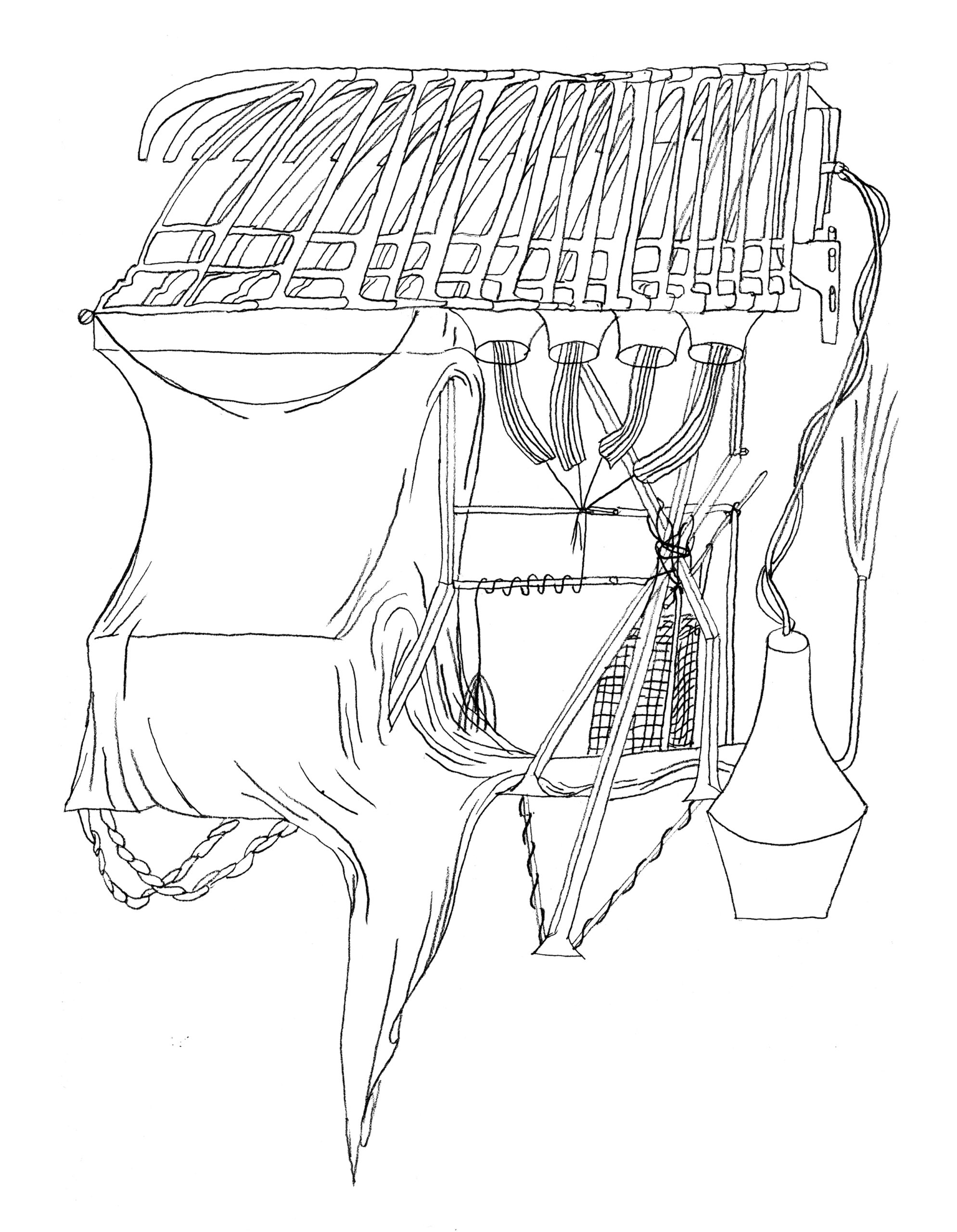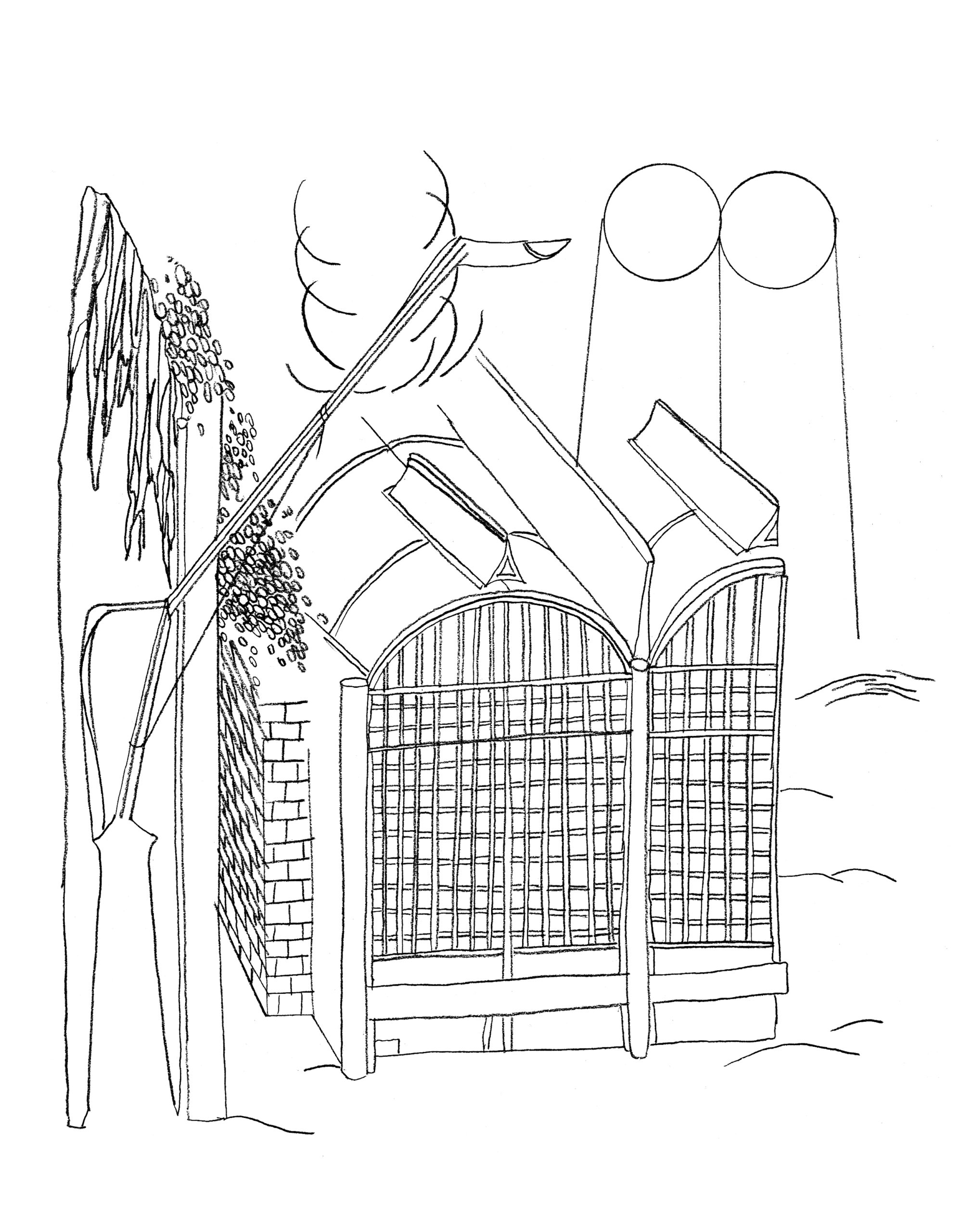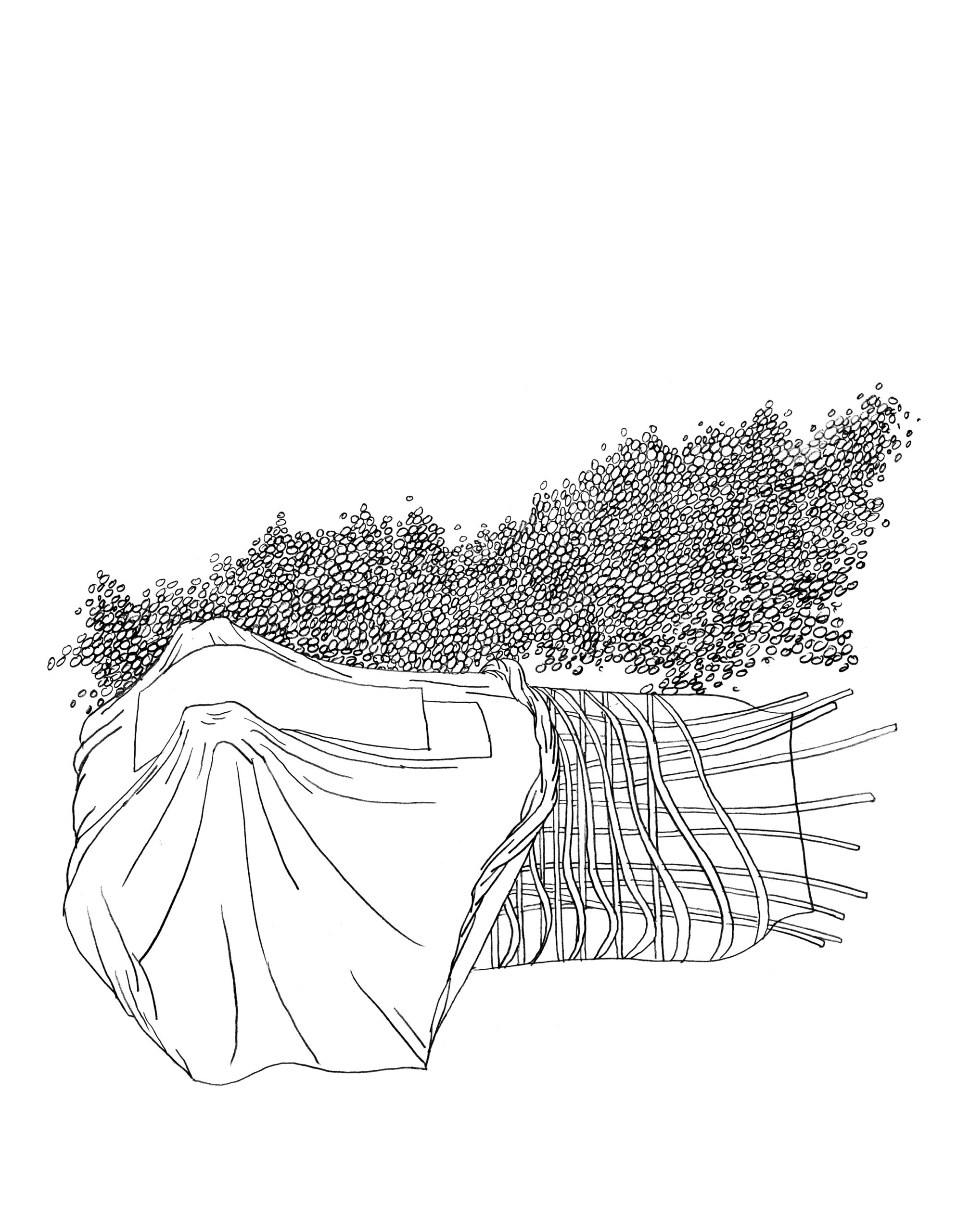
A vital factor shaping the social and cultural practices of the 20th century was research into the phenomenon of everyday life, which became a central theme in architectural manifestos of the time. This investigation of the quotidian serves as the foundation for comparative research into the successes and failures of two key manifestos: Towards a New Architecture (Le Corbusier, 1923), which standardizes everyday life, making it rational and normative, and Delirious New York: A Retroactive Manifesto for Manhattan (Rem Koolhaas, 1978), which deconstructs everyday life, leaving it dynamic and chaotic. The aim is to explore whether everyday life contains consistent elements capable of generating new architectural manifestos.
Introduction
The 20th century, unquestionably among the most dy-namic periods in human history, was marked by radical social, political and cultural transformations that permanently directed civilization toward the developments we encounter today. It was an era defined by devastating wars and technological revolutions, political upheavals and intense urbanization, the emergence of mass media and culture, and the expansion of mass production and consumption. These changes led to drastic shifts in val-ue systems, particularly during the transitional period from modernist to postmodernist thought and practice. Consequently, everyday life is redefined from merely a repetitive reality into an essential social process that forms the foundation of culture.
In the context of such drastic social transformations, the influence of avant-garde movements grew ever more powerful, seeking new ways to express critique and view-points in the public sphere, especially encouraged by new communication media. As a distinctive form of presenting ideas that actively transform social reality, the typology of the manifesto stands out as a crucial form. Although the manifesto, both rhetorically and ideologically, was primarily established within social and political movements from the mid-19th century, it found significant resonance in the field of architecture in the 20th century, thanks to numerous independent journals1 and photographic reproduction.2 Changes in lifestyle, spatial perception, and understandings of urban life initiated new architectural paradigms, articulated not only through theories and various programs but equally through manifestos. Via the language of the manifesto, architecture aimed not only to shape physical space but also to question and foster a new everyday life.
Thus, we can speak of the architectural manifesto as a specific category: it possesses the characteristics of a medium, appears prior to the work (the architectural design can be regarded as an integral part) and responds to previous manifestos.3 Moreover, the architectural manifesto rejects history and works directly against the “authority of the disciplinary treatise”.4 In this way, the architectural manifesto functions as a rhetorical weapon of rupture (breaking with academic classicism, styles and history) and as an instrument of revolution. Through it, radically new spatial concepts are articulated, oriented toward the future as anticipations of a different social, cultural, and spatial order.
In the 20th century, “there has really been no lack of critical and revolutionary actions and statements”.5 Despite many theoretical texts from this period6, only a few took the form of a manifesto, yet those that did caused significant shifts in architectural thought. The Manifesto of Futurist Architecture (Antonio Sant’Elia, 1914) called for a radical break with history, driven by technological progress. Other significant manifestos of modern architecture (Adolf Loos, 1908; Walter Gropius, 1919; Le Corbusier, 1923; Mies van der Rohe, 1929; and others) advocate for a rational and functional architectural approach. In turn, the subsequent postmodernist manifestos offer a critical response to modernism. Some radical movements perceived architecture as a living organ-ism (Metabolism, 1960), while others conceived it as being everything (Hans Hollein, 1968); the most critical mani-festos proclaiming dystopian visions (Archizoom, 1966; Superstudio, 1969), effectively become manifestos against architecture itself.7 The architectural manifesto shifted from rigid texts to analytical narrative (Robert Venturi, 1966; Rem Koolhaas, 1978), culminating in the deconstructivist manifesto (Bernard Tschumi, 1988), which reveals space as an event shaped by user-architecture interaction. Between the modernist and the postmodernist manifestos, in other words, the relationship between architecture and everyday life underwent a significant transformation.
This research examines two opposing positions: Le Cor-busier’s modernist manifesto Toward an Architecture (1923) and Rem Koolhaas’s postmodernist Delirious New York: A Retroactive Manifesto for Manhattan (1978). Le Corbus-ier’s manifesto celebrates the machine, demands standardi-zation and anticipates a new everyday life. Koolhaas’s man-ifesto observes society, embraces urban chaos and adapts to everyday experience. Unlike Le Corbusier, whose ideas are grounded entirely in theory without empirical support, Koolhaas draws conclusions from Manhattan’s experimental space, born of early 20th century architectural enthusiasm, seeing it as a form of productive reality.
Methodologically, the theoretical analysis of the concept of everyday life serves as the foundation for com-parative research of two manifestos: one that standard-izes everyday life, making it rationalized and normative (Le Corbusier) and another that deconstructs everyday life, leaving it dynamic and chaotic (Rem Koolhaas). By demonstrating the conceptual shift from modernist to postmodern urban paradigms, the analysis critically eval-uates the success and weaknesses of their principles with-in contemporary urban planning practices. The expected results will reveal whether everyday life, as a dynamic determinant shaped by socio-economic and technologi-cal realities, contains consistent elements, whose deeper understanding could support the development of new architectural manifestos.
Theoretical Conceptualization of Everyday Life
To understand the relationship between the phenomenon of everyday life and the relevant manifestos, it is first necessary to define what is meant by the terms “everyday life” (or alternately “quotidian”) and outline its treatment in key theoretical frameworks.
The concept of everyday life, once understood as ob-vious to the point of invisibility and long marginalized in philosophical thought as unworthy of reflection,8 emerged in the 20th century as a central theme in social and artistic disciplines, indirectly influencing architectural discourse as well. Everyday life is affirmed as an analytical field for understanding how people live in, use, and experience urban space. Thus, architecture, long burdened by stylistic ideals, gradually frees itself from these canons and begins to be viewed as a space dedicated to people and society – as a place of everyday routines and programs. Today, it is undeniable that “there is no architecture without everyday life, movement and action”,9 implying that architecture cannot be understood outside its relationship with life. Numerous theorists have made significant contributions to this contemporary understanding.
Georg Simmel was among the first to problematize the relationship between humans and the urban environment through the lens of everyday life. In 1903, he described the metropolitan existence of blasé individuals shaped by their chaotic, money-driven reality, arguing that the true significance of a metropolis lies in its influence beyond its physical boundaries.10 Later, in 1930, Walter Benjamin observed that the city is only seemingly homogeneous, as its districts and spaces, separated by boundaries, function as symbolic and social enclaves11 that shape the city’s image and the mentality of its inhabitants.12 The most significant contribution to understanding everyday life was made by Henri Lefebvre (1947), who defined it as a complex, varia-ble, and non-linear process shaped by “multiple interfer-ences”,13 and the interaction between the repetitive and the rhythmic.14 Under Lefebvre’s strong influence, Guy Debord and the Situationists (during the 1950s and 1960s) empha-sized that every human activity begins in everyday life and ultimately returns to it.15 Michel de Certeau (1980) shifted the focus from structural critiques to the often-overlooked realm of everyday practices, conceptualizing everyday life through the interaction between “tactics” – social practices through which individuals appropriate space, and “strat-egies” – mechanisms used by institutions to produce and control space.16 Ben Highmore (2001) explores everyday life through its aesthetic dimension, emphasizing the emotional and sensory experiences embedded in daily routine.17 Joe Moran (2005) identifies two key perspectives of everyday life: one ethnographic, considered as a set of ritualized routines within spaces such as the home, workplace, and city, and the other conceived as a broader and more critical approach, linking everyday life to mass consumption, production, and political structures.18
Everyday life can be analyzed from multiple perspectives, all of which nonetheless involve, or at least point toward, spatial transformations. Industrial capitalism, in this regard, gave rise to the “material feminist” movement in the United States in the late 19th and early 20th centuries, which called for a radical redesign of domestic and urban space to reflect the lives of working women. Their proposals, such as the kitchenless house, the day care center, the public kitchen and the community-dining club, gave rise to the concept of the “cooperative household”.19 In parallel, these shifts in everyday life influenced urban planning, redefining the boundary between private and public space and introducing the notion of the apartment building as a foundational unit of 20th century urban de-sign. Everyday life further transformed cities into centers of mass production and consumption, symbolized by the supermarket (according to Baudrillard), a hyperspace of commodities that shapes life and leads the city to em-brace agglomeration.20 Marc Augé (1995) locates such an invention of the everyday (as defined by de Certeau) within “non-places” – spaces of transport, shopping, and entertainment, key sites of contemporary daily and social life.21 And increasingly, everyday life viewed through the lens of labour organization shows a growing detachment from the economic system, producing alienation and con-tributing to the formation of marginalized, economically excluded suburban communities, such as the banlieues of Paris or ghettos in the United States.**key=22
Contemporary research on everyday life in urban con-texts has expanded to include a diverse range of perspectives that reflect the complexities of globalization. Everyday practices are shaped not only by spatial and social structures, but also by global economic forces, political ideologies, climate change, digital technology, issues of gender, race and identity. In this regard, globali-zation studies, critical urban theory, postcolonial theory or feminist approaches offer critical insights into how neoliberalism, inequality, and subjectivity are negotiated in everyday urban experiences.
The present research establishes two perspectives for understanding everyday life, here deployed as the means for a deductive analysis of architectural approaches, from the macro to the micro level:
- the macro level of everyday life – the production, politics and strategies of space
- the micro level of everyday life – the rhythms, routines and tactics of users
The first approach considers everyday life within a broader urban, social, and politico-economic context. According to Lefebvre, everyday life is connected to social space and social time, both of which are tied to production.**key=23** In this sense, everyday life is not merely spontaneous and repetitive, but in equal measure produced, imposed, and controlled. The production of space is synonymous with the production of everyday life, both grounded in politics that require strategic implementation. The second approach views everyday life through daily rhythms, routines, and rituals, or in other words the customs and habits of human communities. These every-day practices, which include work, family, and leisure, are shaped by socio-cultural context or individual needs. Household activities, commuting to work or shopping, entertainment and recreation, as well as waiting in lines (an inevitable part of everyday life24), are all actions that connect us daily to various spaces, thus rendering them places of our everyday life (mass-produced residential areas, offices, parking lots, highways, etc.). In this sense, everyday life consists of a set of daily actions and their interrelation as a whole.25
As demonstrated, everyday life remains a complex of individual and social actions and attitudes, demanding its analysis and understanding from multiple perspectives. Although many authors have interpreted it through the defined polarities, such a division into exclusively two ap-proaches is not explicitly defined in the existing literature. Instead, it is defined here, for the purpose of research, to serve as an analytical framework toward a deeper and more systematic understanding of how Le Corbusier and Rem Koolhaas, through their architectural manifestos, contem-plate the relationship between everyday life and space.
The Macro Level of Everyday Life in Manifestos: Production of Space
In the 20th century, the complex processes of everyday life, resembling a spectacle,26 were launched two successive phase shifts in the production of space27: first through industrialization, to the cause of rapid urbanization, and later through deindustrialization. These processes have transformed the city from a previously closed system into an urban phenomenon – an open field of interconnected economic, technological, and social upheavals.
Le Corbusier positions the production of space as a cru-cial mechanism for achieving social equilibrium. In his Manifesto, he advocates for the construction of entirely new cities, rejecting existing inherited models. He views the problems of everyday life as the consequences of imposed collective needs, defined through statistics and calculations, and finds their resolution in “a new basis of construction established in logic”28 – that is, in the technical character of the era. Thus, the new mechanisms for organizing everyday life in generically produced metropolises follow the princi-ples of production and the logic of the machine, which Le Corbusier sees as the “style of the epoch”.29
While Le Corbusier searched for appropriate locations for his theoretical metropolises, a different process was underway, in the words of Koolhaas: “a new culture (the Machine Age?) selected Manhattan as laboratory”.30 Manhattan, as a produced space but not a planned one, emerged from the spontaneous manifestation of a collec-tive experiment. For Koolhaas, “the entire city became a factory of man-made experience, where the real and the natural ceased to exist.”31 Unlike the rational city, Manhattan is not a product of social reorganization, but rather a product of social reflection.
Like Le Corbusier’s Radiant City, rooted in the Mani-festo’s principles, Koolhaas’s critical reinterpretation of Manhattan urbanity equally points to space as the result of human production – “cities of forged fabric”.32 However, their outcomes differ. The Radiant City is a planned produced space that in parallel produces its own new, equally planned everyday life, whereas Manhattan is a spontaneous product of everyday life as it occurs. Although their development policies partially coincide at the level of utility (responses to the needs of urban life), their implementation strategies differ significantly. The Radiant City demands the standard-ization and control of everyday life through predefined spa-tial models, while Manhattan embraces unpredictability and chaos as support for everyday life. One approach produces space with the intention of shaping society, whereas the other recognizes space as a reflection of social complexity.
The Politics of Space
What is nonetheless common to both approaches are their origins among utilitarian principles based on the maxi-mum of usability, rational organization, and efficiency.
The Radiant City implements utilitarian politics through rationalization and standardization, whereas Manhat-tan affirms utilitarianism by embracing the complexity of everyday life. Koolhaas highlighted: “Manhattan is a utilitarian polemic”,33 whereas for Le Corbusier, the house is no longer a luxurious object but a functional tool, similar to a car. Their utilitarian policies have different foundations: Manhattan tests its strategies in the space of the Coney Island amusement park, while the Radiant City anticipates its strategies through theoretical and concep-tual ideas – inspired by Tony Garnier’s “Industrial City” (unrealized) and the visions of the “The City of Towers” by Auguste Perret, as Le Corbusier himself acknowledges. Jane Jacobs, meanwhile, argued that the Radiant City is rooted in Ebenezer Howard’s Garden City movement.34
The Coney Island amusement park is an experiment both spatial and cultural: embracing the needs of a new everyday life, it becomes a laboratory for testing the extreme transformations of urban practice, now turned toward entertainment and synthetic experiences based on technology and spectacle. This model of urbanity applied to Manhattan, called “psycho-mechanical urbanism”,35 is based on the “new Technology of the Fantastic: a per-manent conspiracy against the realities of the external world”.36 Koolhaas explains that, in this way, entirely new relationships were established between site, program, form and technology: “The site has now become a minia-ture state: the program its ideology; and architecture the arrangement of the technological apparatus that compen-sates for the loss of real physicality”.37 The utilitarianism of Manhattan is based on a program that supports the growth of culture and density in a concentrated space, where reality is transformed into a synthetic spectacle.
Le Corbusier’s intention was to create a new urban reality that would completely reject the “turbulent clamor of the giant adolescent of the machine age”38, as he described New York, warning that his Manhattan would be destroyed in Paris. The Plan Voisin (1925), conceived as a proposal for the radical reconstruction of central Paris, envisioned the demolition of a large portion of the old urban fabric. On the space cleared of historical layers – a tabula rasa – a new urban matrix was to emerge – rational, functional, and effi-cient. According to Le Corbusier, this would resolve the key problems of Paris at the time: overcrowding, unhygienic conditions and traffic collapse. The new everyday life of the city was envisioned within an orthogonal grid, with identical office skyscrapers arranged in a regular pattern, surrounded by expansive green spaces. The city has a clear, immedi-ately evident functional zoning: residential, commercial, industrial, and recreational areas are separated, and traffic is organized hierarchically, with an emphasis on efficiency and safety. This utilitarian vision of the city was directly inspired by the ideas of Tony Garnier’s “Industrial City”, whose work Le Corbusier praised as an example of harmo-nious integration of utilitarian solutions. The principle of es-tablishing order was crucial: “Where order reigns, well-being begins”.39 By introducing order, Le Corbusier gives reasonable limits to Auguste Perret’s futuristic idea of “The City of Tow-ers”, providing a plan that is the origin of everything, as he states: “Modern life demands, and is waiting for, a new kind of plan both for the house and for the city”.40 Rem Koolhaas views the Plan Voisin (later developed into the Radiant City) not as a new Paris, but as an anti-Manhattan.41
Strategy: the Grid
Any true comparison between the Radiant City and Man-hattan must begin with the fundamental spatial pattern – the grid. The grid is simultaneously a strategy of order, efficiency, functionality and control, but also a field of unlimited combinations, accumulation, and density. It leads to extremes: rigid homogeneity and chaotic hetero-geneity. In both cases, the grid is a tool of utilitarianism. Both Manhattan and The Radiant City choose the grid for the most pragmatic reason: this organizing form is the cheapest to build and the most suitable for living. The grid produces identical blocks, thereby eliminating systems of hierarchy and differentiation inherent to tra-ditional cities. As Koolhaas observes: “The plotting of its streets and blocks announces that the subjugation, if not obliteration, of nature is its true ambition.”42 The grid is self-referential, self-sustaining and disregards all the lessons of inherited urbanism.
For Le Corbusier, the grid is a rational tool for organizing space. It enables the easy functional organization of the city, introduces order and encourages series-produced construc-tion. In its right-angled plan, open blocks can be formed where buildings are placed as points in the center, allowing for maximum exposure to sunlight, air, and greenery. In the Radiant City, the grid serves as a tool for expressing utopian socialism, offering equal access to society’s basic needs through its homogeneity. Koolhaas interprets this as “to be able to open your eyes on a patch of sky, to live near a tree, beside a lawn” and explains that satisfying these needs is actually achieving the efficiency of banality.43
Manhattan’s grid develops its own system of formal values, which, adapted to everyday life, demands a strat-egy to differentiate one block from another. The 1916 Zoning Law introduced rules for the differentiation of the city’s blocks, bringing variability into the uniform orthogonal matrix. As such, Manhattan produced 2,028 identical grid units for 2,028 different “phantom houses”. Interpreted as a “Mega-Village” the grid turns the city into “a mosaic of episodes, each with its own particular life span, that contest each other through the medium of the grid”.44


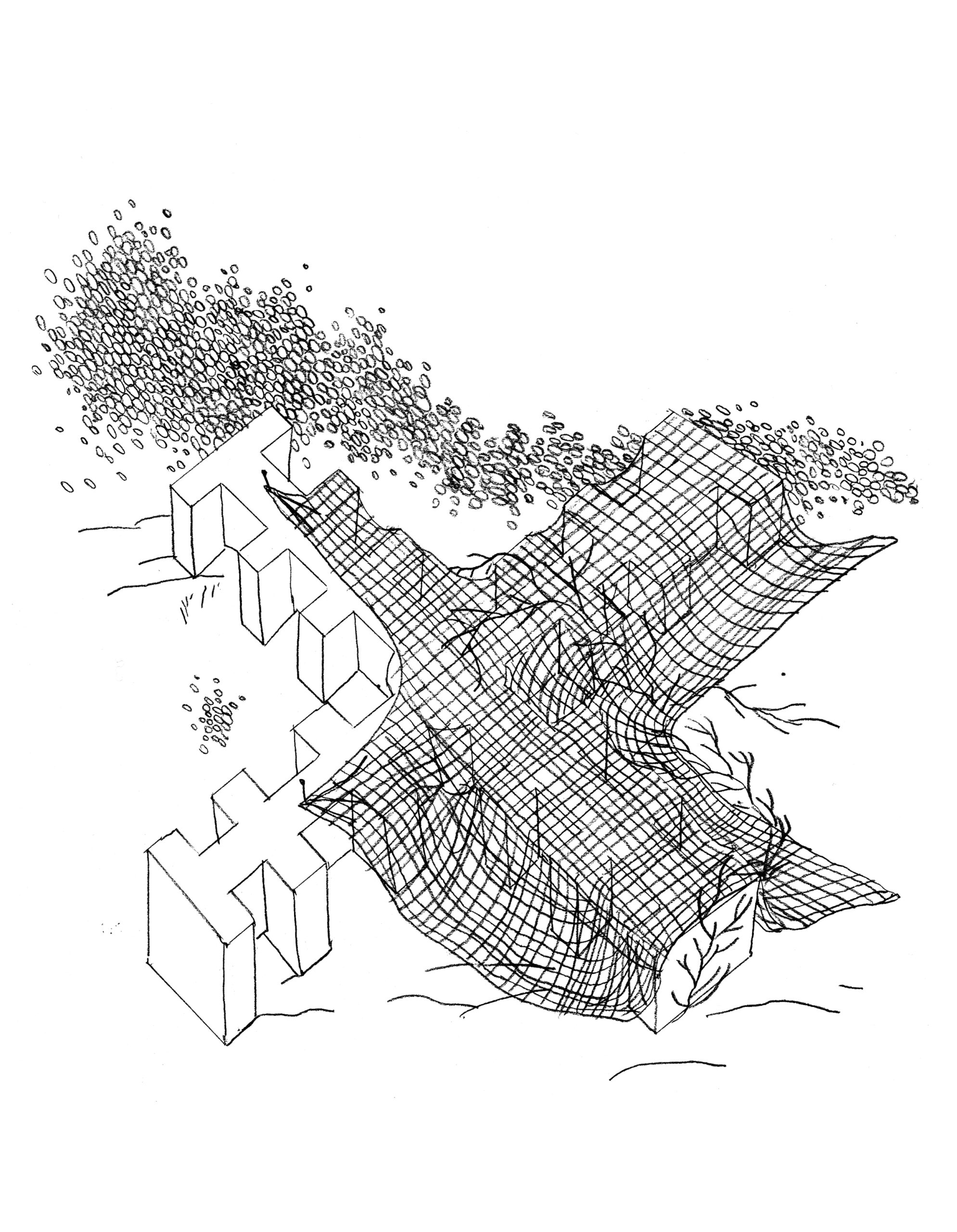
As for the order that Le Corbusier develops solely from the plan (as the originator of form and surface), Koolhaas reformulates it into chaos, using Manhattan as an empir-ical example. He explains: “The Grid’s two-dimensional discipline also creates undreamt of freedom for three-di-mensional anarchy.”45 Figure 1 presents the grid as a con-ceptual field – an abstract framework enabling unlimited interpretations, not only for spatial organization but also for density of social interaction. Not just a technical solution for utilitarian purposes: equally, it is an ideological construct of space that can simultaneously produce rigid stiffness or chaotic freedom. In this sense, the grid becomes precisely what Koolhaas calls “a conceptual speculation”.46
Strategy: Skyscrapers
If the grid is a conceptual speculation, towers represent its spatial articulation – a translation of the abstract grid into a concrete architectural reality. Figure 2 illustrates how Koolhaas and Le Corbusier interpret the skyscraper. Le Corbusier saw the orthogonal grid as a basis for serial production and standardization of building sites. Serial production requires proper parceling, introduces order, prevents chaos and changes housing concepts. As Corbusier emphasizes in his Manifesto, all these elements lead to social transformation. Furthermore, new technol-ogies encouraged boldness in construction, enabling the conceptualization of the Cartesian skyscraper.
The Cartesian skyscrapers in the Radiant City reach heights of up to 220 meters and widths of 150–200 meters. Placed at distances of 250–300 meters apart, they are separated by arteries of hierarchical traffic. A single tower can accommodate up to 40,000 users, increasing urban density by 5 to 10 times, while simultaneously freeing space for parks, sunlight, and air. Eliminating the tradi-tional courtyard, these towers are intended exclusively for commercial activities. They represent Le Corbusi-er’s critique of Manhattan, a negation of its rectangular blocks with narrow street canyons, unhealthy courtyards between skyscrapers, arranged at close distances. Against the concentration and density of Manhattan skyscrapers, Le Corbusier addresses urban space by separating point-like megastructures surrounded by air and greenery, set apart from the noise of traffic arteries, so that the sky-scrapers repeat along imposing avenues: his envisioning of an architecture worthy of the modern era.47


Yet the homogeneity of the skyscrapers and their generic appearance become banal images of aestheticized honesty of form. For Le Corbusier, the exterior is the out-come of the interior, defined by the fundamental elements of architecture: light and shadow, wall and space.48 Rem Koolhaas explains this modernist axiom – form follows function – as a flourish of “the ideological hysteria of the interior architecture”.49 When form follows function, the function is homogeneous, and the form is aestheticized. In this sense, Koolhaas claims that, unlike the skyscrapers of Manhattan, the Radiant City restricts the expansion of social interactions.
For the Manhattan skyscraper to accommodate the diversity of everyday social interactions, it became necessary to perform a metaphorical lobotomy.50 The two functions of the building were separated: the exterior serves as a permanent monument to the city, while the interior accommodates the variability of daily life. Through this lobotomy, the ex-ternal auto-monumentality conceals the inner everyday life.51 Hence what characterizes the Manhattan skyscraper is its underlying duality – the architecture of the metro-politan exterior, which belongs to the city, and the interior design, which is shaped by the changes in metropolitan everyday culture.52 Here, form no longer follows function; instead, formalism belongs to the exterior monument, while functionalism pertains to the interior program. Contrary to the Cartesian skyscraper, the Manhattan skyscraper ac-commodates diverse programs – it is a hybrid that makes each block unit and each skyscraper a “city within a city”.
Strategy: the Street
Jane Jacobs emphasizes: “Streets and their sidewalks […] are the vital organs of a city.”53 For Jacobs, the street is not merely an infrastructural unit but the fundamental cell of urban life: the built element crucial for urban safety, social interaction, economic vitality, and the everyday spontaneity of the city.
Le Corbusier, by contrast, primarily views the street as a medium for traffic flow in the age of speed. In his words: “the sky-scraper cannot be isolated from the question of the street and of transport both horizontal and vertical.”54 His vision of the city includes a network of elevated highways connecting skyscrapers, whereby the traditional street no longer belongs to pedestrians but to automobiles. In this context, the automobile becomes the exalted object of the modern age – a symbol of functional perfection and technical precision. The street is no longer conceived as a space of spontaneity, encounters and everyday life but as an instrument of efficiency. For Koolhaas that street grid, “spaced out beyond any possible association”55 excludes the possibility of social interaction.


Le Corbusier, in his critique of Manhattan, observes that the skyscraper has forced pedestrians back into the narrow streets instead of yielding the streets to speed. He describes Manhattan’s pedestrians as “the louse at the foot of the tower”.56 However, for Koolhaas, this is the essence of Manhattan – the encounter between the street and the phantom houses, a meeting of traditional and mutated life, or more specifically, the Culture of Congestion – “the culture of the 20th century”.57
Figure 3 illustrates different concepts of social density represented in street layouts, through the organization and proximity of building. In this sense, while Le Corbusier seeks to cleanse the city of the chaos of narrow streets to achieve a rational and functional city, Koolhaas recognizes the potential of urban life precisely in the chaos and congestion of the streets.
The Micro Level of Everyday Life in Manifestos
The physical locus where everyday activities begin and end is the dwelling, between which other actions take place: movement, work, indeed all forms of activity. Martin Heidegger emphasizes that the dwelling is fundamen-tally a human relationship to space, realized through places defined by buildings.58 Outside the public sphere, everyday life is reduced to the individual and intimate world of the home. Creating our identification with the domestic space are the habits and behaviors that shape our everyday life. As Gaston Bachelard notes: “A house constitutes a body of images that give mankind proofs or illusions of stability.”59 Thus, the home encompasses the physical (built) and existential (mental) spheres of life.
“I believe that many traces still linger within us, sentimental memories of houses from the good old days”60 writes Le Corbusier, who paradoxically calls for the era-sure of all sentimental ties to the past to create a new con-cept of dwelling essential for social progress. According to him, the demands of the era are reflected in the need to analyze the home of the ordinary, everyday person – who requires humane foundations, humane dimensions, typical needs, typical functions and ultimately, a typical emotion.61 Le Corbusier further explains that new con-cepts of the dwelling are possible if they rely on the laws of economy, social and individual actions. In this spir-it, he revises the values and constituent elements of the home, concluding that both the physical and existential components of the house must strive toward a universal type, as he asserts: “All men have the same organism, the same functions. All men have the same needs.”62
In consequence, Le Corbusier offers us his identical, mass-produced “House-Tool”.63 For him, the problem of everyday life lay in the problem of a new house plan, approaching it as engineers approach mechanical prob-lems. Designing an apartment, in this framework, becomes equivalent to designing an automotive chassis in industry. The dwelling becomes reduced to the oft-cited “machine for living”, designed to optimize daily rou-tines: meeting the needs for bathrooms, sunlight, hot and cold water, temperature control, storage, hygiene and ultimately – beauty. He suggests that in these everyday routines, movements, commands, and even thoughts must be economized – thus he proposes apartments with reduced spatial dimensions.64 Further, to eliminate any arbitrariness, Le Corbusier introduces the proportion-al diagram Modulor, based on the measurements of the human body, as a tool for designing the functional dwelling. In this way, he establishes the standards of the
modernist apartment, where the built realm of everyday life is condensed into five points: the pilotis (freeing the ground floor), flat roofs, free facades, open floor plans, and horizontal windows. In contrast to Le Corbusier’s rationalist standardized approach, Koolhaas’s “delirious” Manhattan represents a dynamic process that evolves alongside the city. Manhat-tan’s housing evolves in a continuous pursuit of a suitable form of metropolitan life: from private dwellings and brownstone row houses to apartments and apartment hotels, incorporating more amenities for entertainment and functions that were previously absent.65 As a result, Manhattan celebrates the residential hotel, a type of hous-ing that Rem Koolhaas calls “Manhattan’s unit of habita-tion”.66 However, this housing type emerged in American cities at the end of the 19th century, as a product of a new everyday life (reflecting the “material feminist” stance), combining private apartments with common facilities (kitchens, laundries, dining rooms).67
This typology, a precursor to contemporary residential hybrids, offers residents privacy and active participation in the metropolitan life. No longer is housing defined solely through individual space, but as integrated with social amenities. Koolhaas cites the example of the Waldorf-Astoria skyscraper, which functions simultaneously as a hotel, residential building, and public space, featuring a grand ballroom, entertainment facilities, a garage for private railcars, various exhibition halls, all organized across 40 floors – the first house-skyscraper of Manhat-tan, the archetype of a new urban typology. For Koolhaas, such hybrids represent a new form of urban commune, a response to the contemporary demands for social cohe-sion set by the dominant economy: “Only as a commune can they afford the machinery to sustain the expensive and strenuous tradition of the last word.”68
New forms of residential hotels, such as the Waldorf-Astoria, illustrate the transformations aligned with the demands of everyday life. The interior of the sky-scraper becomes autonomous, capable of accommodating various functions, against the strict separation previously described as a lobotomy. Residential typology thus be-comes flexible and adaptable to different combinations of human activities. Koolhaas explains that Manhattan housing emerged as a spontaneous response, driven not primarily by physical needs, but by programmatic content. While Manhattan’s housing reflects a program focused on entertainment and opulence, Le Corbusier realized this principle of community differently with the Unité d’Habitation in Marseille (1947–1952). This “machine for living” integrated the essential functions of urban life: housing, schools, kindergartens, parks, and shops, aiming to optimize everyday activities, standardize them, and make them more efficient. In this way, the program drives housing development differently: in Manhattan, it responds to consumerism and changing rhythms of everyday life, whereas Le Corbusier treats it as a fixed framework to optimize efficiency and rationality.
Discussion
As written texts, manifestoes are primarily examined through their artistic or ideological ambitions; viewing them through the lens of everyday life, by contrast, introduces a new methodological framework for critical interpretation. And one result is to highlight the inherent limitations of the manifesto form. As a genre, it tends to celebrate its own ideas rather than question them, em-phasizing vision over critical reflection. Additionally, beyond the manifesto’s narrative, the significant presence of images must also be considered. Since modernism, architectural thought has been inseparable from the image as a medium. Le Corbusier’s manifesto presents numer-ous photographs emphasizing aestheticized built forms essentially deprived of any living human presence. Later, architectural thought shifted from modernism’s dependence on homogeneous, aestheticized images to postmodernism’s reliance on heterogeneous, abstract collages. Koolhaas, tellingly, employed surrealistic fragmented montages accompanied ambiguous terms to uncover the unconscious dimension of his “Manhattanism”. By addressing typological and programmatic transformations, he ultimately questions the problem of meaning in architecture – as the central concern of postmodern debate.69 Influenced by (post)structuralist theories, postmodernism produced distortions of reality through language, aes-theticized imagery, and media, so that many avant-garde movements treated everyday life as a utopian abstraction detached from social reality.
Our research has shown that Le Corbusier’s design principles are, despite their reputation for pragmatic func-tionalism, tools for the aestheticization of everyday life. He warns that we live in ugly houses, from which we are forced to escape into public spaces of social interaction – cafes and dance halls. To resolve this problem of everyday life, he renders the tools themselves aesthetic, explaining that usefulness is synonymous with beauty.70 According to him, architecture provide visual pleasure, such that the aestheticization of everyday life could transform reality into a visually appealing frame. Yet, as Neil Leach writes, the sensory stimulation caused by images produces an an-esthetizing, narcotic effect that replaces ethical principles with aesthetic ones.71 Hence, in its outcome architecture closes itself off within its aesthetic shells, distant from the real concerns of everyday life.
The failure of Le Corbusier’s projects is exemplified by the Pessac settlement near Bordeaux (1924–1926), intended as a laboratory for standardized housing. Only 51 of the planned 135 houses were built, as construction costs dou-bled the intended price for a severely restricted budget. While the pure aesthetics and geometry of houses allowed residents to adopt the space to their needs, asserting indi-viduality against standardization,72 the result over time was the houses undergoing numerous transformations (terraces enclosed, windows resized, roofs altered, and decorative elements added, etc.73). Philippe Budon, in his 1969 study of the site including resident interviews, notes that these transformations ultimately benefited the inhabitants; in his words, “life is too complex a phenomenon to be reduced to a system of spatial coordinates.” Le Corbusier himself agreed with when he once stated regarding Pessac: “Life is always right, architects are wrong.”74
Engaging with the existential aspect of housing re-quires acknowledgment of the user’s need to subjectiv-ize space, a relation that cannot be fully anticipated. Koolhaas suggests the categories of “incompleteness” or “staging of uncertainty” that could challenge bounda-ries, reveal spatial hybrids, and rediscover psychological space.75 In the case of Manhattan, this concept produced the physical result of a speculative capitalist city that adapts to the optimization of land, costs and investors’ demands. As such, the concept of chaos and uncertainty can serve less as a tool of spatial freedom than as a means of economic exploitation of space. Since the 19th century, New York has struggled with housing issues, rooted in land conflict and later intersected with racial and ethnic politics, giving rise to a tradition of housing activism. During the 1960s and 1970s, the city witnessed the largest wave of housing movements, amid widespread residential abandonment followed by neoliberal gentrification and property neglect. Today, housing activism in New York continues to reflect these historical struggles.76
Gentrification accelerated alongside the rise of consumer culture, driven by new economic models and celebrated through the imagery and space of consumption. These are the issues of the Generic City, as Koolhaas would term it, as a contemporary product of globalization, freed from the weight of any historical, cultural or ideological lay-ers. Contemporary New York, like other generic cities, demonstrates how a significant portion of the housing stock primarily functions as investment capital. None of these issues are addressed in Koolhaas’s manifesto, where he in fact emphasizes that Manhattan is not presented as a literal phenomenon to be replaced, but as an analogy.77 Thus, Manhattan’s unregulated freedoms cannot serve as a universal model for fulfilling everyday needs.
The Radiant City would also be a generic city that can be produced anywhere. Le Corbusier envisioned it as planned cities, whose layout and form are beautiful, with clean streets adapted to the needs of living in the spirit of mass production.78 Promoted through the Ath-ens Charter (1933), the universal applicability of strictly functional zones and a single monotype of mass-pro-duced construction was embraced as a convincing gen-eralization that solves all the varied urban problems of European cities. However, immediately upon its first im-plementations, it became clear that these were primarily expressions of aesthetic choices.79 Despite the attempts at standardization, or contrastingly the postmodern encouragement of chaos, everyday life in contemporary cities today is exposed to problems left unaddressed by either approach, such as gentrification, social inequality, functional spatial segregation and unsustainable mobil-ity, lack of affordable housing, privatized public spaces and numerous other urban challenges.
Conclusion
The concept of everyday life represents a vast and com-plex phenomenon that cannot be fully explored within the limited scope of this paper. Gradual or sudden shifts in the social environment, along with the contingencies of uncertainty and unpredictability, prevent everyday life from being reduced to a single, universal definition: it remains a continuously evolving process, shaped by multiple overlapping influences.
Modernist architecture, which Koolhaas interprets as a hedonistic movement,80 celebrated the aesthetics of minimalism as a response to the decay and disorder of everyday life, pursuing visual and hygienic purity. Post-modern architecture, by contrast, integrates hedonism and consumerism directly into the spatial experience. A comparative analysis of the two manifestos reveals the methods and design strategies through which two experimental urban entities, theoretically the Radiant City and empirically Manhattan, emerged as distinct physical and sociological imprints. While both are eco-nomically driven products, their spatial politics aim at utility through control strategies involving grid plans, skyscrapers and streets, yet their implementation leads to sharply divergent outcomes.
Contemporary housing transcends the boundaries of rational planning and technical functionality. From Le Corbusier’s modernist experiments to Manhattan’s met-ropolitan hybrids, it becomes evident that living space is not merely a physical construct, but a dynamic stage for everyday life – shaped by the unpredictable and sub-jective needs of its users. In this context, architecture must remain open-ended: an unfinished system capable of adaptation, transformation, and continuous evolution in dialogue with those who inhabit it. One conclusion to be drawn is that any desire for standardization or con-trastingly chaotization of everyday life, as presented in the two Manifestos, ultimately forms manifestations of aestheticization and economic programming, both of which demonstrate the failures of urban space.
In architectural practice, the positioning of everyday life in relation to all other concerns – spatial geome-try, functional organization, ecological sustainability, economic efficiency, aesthetic considerations – should constitute only one component of the technical frame-work that supports daily life. Beyond these measurable characteristics (whether material, functional, or visual), addressing the mental and existential dimensions of hu-man experience is the most vital task of architecture.81 Engaging with the existential aspect of space is far from straightforward; it is often neglected precisely because it resists quantification and cannot be translated into standard design metrics. Existential space cannot be de-fined solely through the language of geometry; rather, it encompasses the lived experiences of its users, and, ultimately, the question of everyday life itself.
Marija Milikić
orcid: 0009-0000-4172-2462
University of Montenegro Faculty of Architecture in Podgorica
Džordža Vašingtona bb 81000 Podgorica Montenegro cacic.marija@yahoo.com marija.c@ucg.ac.me
COLOMINA, Beatriz. 2015 Manifesto Architecture. In: Buckley, C. (ed.). After the Manifesto: Writing, Architecture, and Media in a New Century. New York: GSAPP Books on Architecture and the City, p. 44.
BUCKLEY, Craig. 2015. After the Manifesto. In: Buckley, C. (ed.), 2015.
Colomina, B., 2015, p. 41.
VIDLER, Antony. 2015. From Manifesto to Discourse. In: Buckley, C.(ed.), 2015, pp. 24–40.
CONRADS, Ulrich. 1964. Programs and manifestoes on 20th century architecture. Cambridge, MA: MIT Press, p.11.
For further research many of these texts can be found in the following important books: Conrads, U., 1964; JENCKS, Charles and KROPF, Karl. 1997. Theories and Manifestoes of Contemporary Architecture. Chichester: Academy Editions; HAYS, K. Michael. 1998. Architecture Theory since 1968. Cambridge, MA: MIT Press.
Vidler, A., 2015, pp. 24–40.
LEFEBVRE, Henri.1988. Kritika svakidašnjeg života. Zagreb: Naprijed, p. 498.
TSCHUMI, Bernard. 1996. Architecture and Disjunction. Cambridge, MA: MIT Press, p. 23.
SIMMEL, Georg. 2002. Metropolis and Mental Life. In: Bridge, G. and Watson, S. (eds.). The Blackwell City Reader. Oxford: Wiley-Blackwell, p. 17.
BENJAMIN, Walter. 2002. The Arcades Project. Cambridge, MA: First Harvard University Press, p. 88.
BENJAMIN, Walter. 1985. Moscow Diary. October, 35, winter, p. 114.
Lefebvre, H.,1988, p. 505.
LEFEBVRE, Henri and REGULIER, Catherine. 2004. The Rhythmanalytical Project. In: Lefebvre, H. Rhythmanalysis – Space, Time and Everyday Life. London: Continuum, p. 74.
DEBORD, Guy. 1961. Perspectives de modifications conscientes dans la vie quotidi-enne. Internationale Situation-niste, (6), August 1961. Available at: https://anarhisticka-biblioteka.net/library/situacionis-ticka-internacionala-perspek-tive-svesne-promene-svakod-nevnog-zivota (Accessed: November, 2025).
CERTEAU, Michel de. 2002. Invencija svakodnevnice. Zagreb: Naklada.
HIGHMORE, Ben. 2002. Everyday Life and Cultural Theo-ry. New York: Routledge.
MORAN, Joe. 2005. Reading the Everyday. New York: Routledge, pp. 9–10.
HAYDEN, Dolores. 1981. The Grand Domestic Revolution: a history of feminist designs for American homes, neighborhoods and cities. Cambridge, MA: MIT Press.
BODRIJAR, Žan. 1991. Simulakrum i simulacija. Novi sad: IP Svetovi, p. 82.
AUGE, Marc. 1995. Non-Places, Introduction to an Anthropology of Supermodernity. London: Verso.
SRNICEK, Nick and WILLIAMS, Alex. 2015. Inventing the Future, Postcapital-ism and a World without Work. London: Verso, p. 56.
Lefebvre, H., 1988, p. 498.
Moran, J., 2005, p. 7.
Lefebvre, H., 1988, p. 498.
DEBOR, Gi. 2003. Društvo spektakla. Belgrade: Anarhija / Blok 45.
LEFEVR, Anri. 1974. Urbana revolucija. Belgrade: Nolit.
LE CORBUSIER. 1986. Towards a New Architecture. New York: Dover Publications, p. 63.
Le Corbusier, 1986, p. 89
KOOLHAAS, Rem. 1994. Delirious New York: A Retroactive Manifesto for Manhattan. New York: Monacelli Press, p. 9.
Koolhaas, R., 1994, p. 10.
Koolhaas, R., 1994, p. 257.
Koolhaas, R., 1994, p. 19.
DŽEJKOBS, Džejn. 2011. Smrt i život velikih američkih gradova. Novi Sad: Mediterran publishing, p. 35.
Rem Koolhaas introduces the concept of psychomechanical urbanism to describe the Coney Island as a planned physical space where technology and architecture are used to manage human experiences.
Koolhaas, R., 1994, p. 62.
Koolhaas, R., 1994, p. 62.
LE CORBUSIER. 1964. La Ville Radieuse. Paris: Vincent Freal, p. 134.
Le Corbusier, 1986, p. 54.
Le Corbusier, 1986, p. 45.
Koolhaas, R., 1994, p. 258.
Koolhaas, R., 1994, p. 20.
Koolhaas, R., 1994, p. 271.
Koolhaas, R., 1994, p. 21.
Koolhaas, R., 1994, p. 20.
Koolhaas, R., 1994, p. 20.
Le Corbusier, 1986, p. 58.
Le Corbusier, 1986, p.177.
Koolhaas, R., 1994, p. 255.
Rem Koolhaas uses the metaphor of lobotomy (the procedure in brain surgery) to describe the separation between exterior and interior in Manhattan’s architecture.
Koolhaas, R., 1994, p. 101.
Koolhaas, R., 1994, p. 104.
Džejkobs, Dž., 2011, p. 41.
LE CORBUSIER. 1971. The City of Tomorrow and its Planning. London: Architectural Press, p. 103.
Koolhaas, R., 1994, p. 257.
Le Corbusier, 1964, p. 127.
Koolhaas, R., 1994, p. 125.
HAJDEGER, Martin. 2009. Građenje, stanovanje, mišljenje. In: Perović, M. (ed.). Antologija teorija arhitekture XX veka. Belgrade: Građevinska knjiga. pp. 309–320.
BACHELARD, Gaston. 1994. The Poetics of Space. Boston: Beacon Press, p.17.
LE KORBIZJE. 2006. Ka pravoj arhitekturi. Belgrade: Građevinska knjiga, p. XXX.
Le Korbizje, 2006, p. XXXI.
Le Corbusier, 1986, p.136.
Le Corbusier, 1986, p. 263
Le Corbusier, 1986, pp. 122–123
Koolhaas, R., 1994, p. 143.
Koolhaas, R., 1994, p. 144.
Hayden, D., 1981.
Koolhaas, R., 1994, p. 144.
HSU, Frances. 2016. Benjamin and Koolhaas: History’s Afterlife. Footprint: Delft Architecture theory journal, (18), pp.67–68. doi: 10.7480/foot-print.10.1.974.
Le Corbusier, 1986, p.110.
LEACH, Neil. 1999. The Anestethics of Architecture. Cambridge, MA: MIT Press, p. 15.
BOUDON, Philippe. 1972. Lived-in Architecture. Cambridge, MA: MIT Press, pp. 161-165.
TILL, Jeremy. 2009. Architecture Depends. London: MIT Press, p. 41.
Boudon, P., 1972, pp. 1–4.
KOOLHAAS, Rem and MAU, Bruce. 1995. S, M, L, XL.New York: Monacelli press, p. 969.
MADDEN, David and MAR-CUSE, Peter. 2016. In Defense of Housing, The Politics of Crises. New York: Verso, pp. 145–191.
VAN DIJK, Hans. 2019. A more expansive spectrum of functionalism. In: Van Gerrewey, C.(ed.). Oma Rem Koolhaas, a Critical Reader. Basel: Birkhauser, p. 39.
Le Corbusier, 1986, p. 40.
FREMPTON, Kenet. 2004. Moderna arhitektura, kritička istorija, Belgrade: Orion art, p. 270.
OMA. 2025. La Casa Palestra [online]. Available at: https://www.oma.com/projects/casa-palestra (Accessed: November 2025).
PALLASMAA, Juhani. 2015. Body,mind and imagination: the mental essence of architecture. In: Robinskon, S. and Pallasmaa, J. (eds.). Mind in Architecture: Neuroscience, Embodiment and the Future of Design. London: MIT Press, p. 52.
DOI: https://doi.org/10.31577/archandurb.2025.59.3-4.5

This work is licensed under a Creative Commons Attribution 4.0 International License