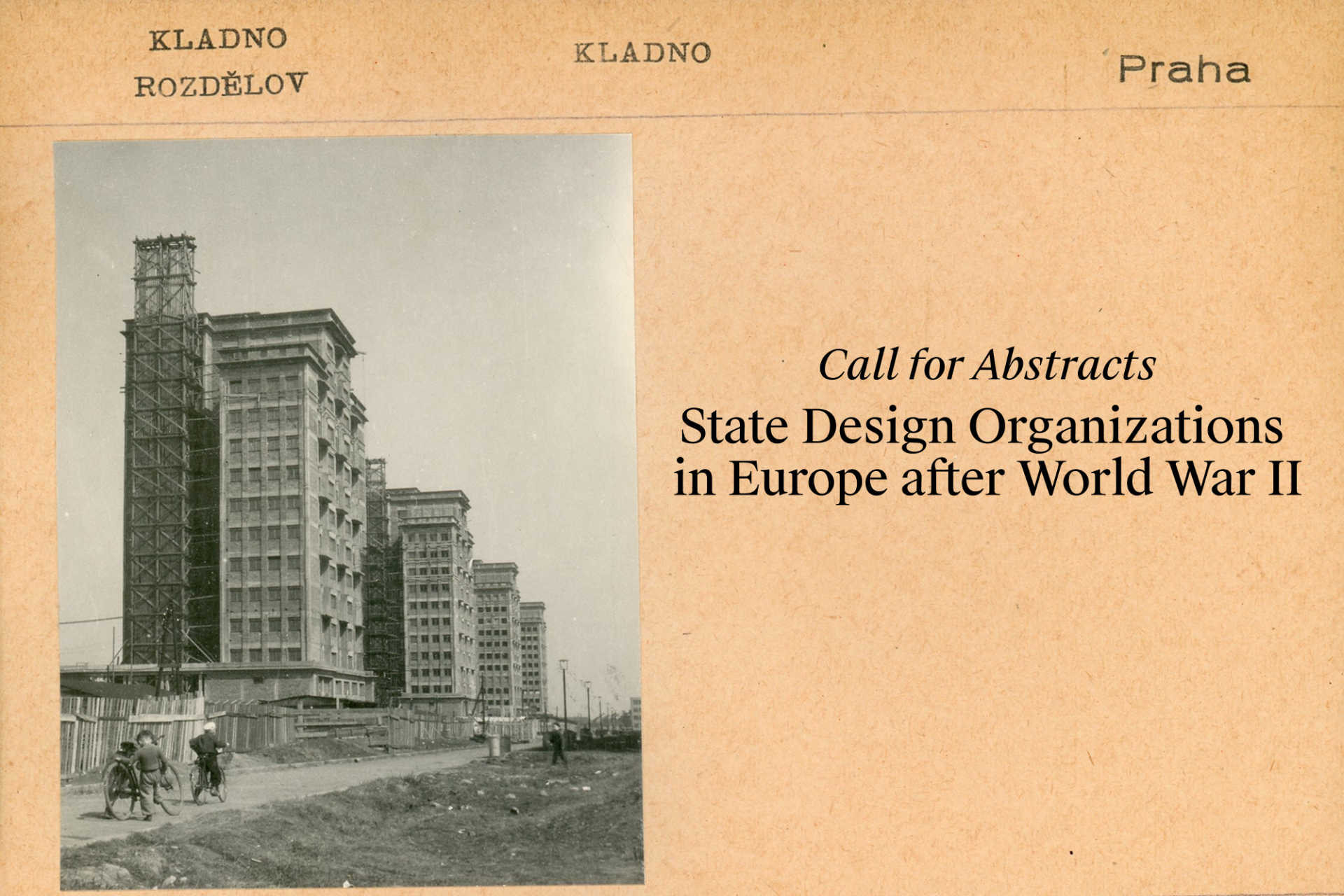
A common interpretation of architectural history in Central Europe treats the decade immediately following World War II primarily through the prism of Sovietization, regarded as disrupting the continuity of local variants of modernism. In recent years, though, an increasingly accepted standpoint looks past the era’s ornamented facades and the outer shell of directive dogmatism to find in this architecture various manifestations of modernization processes, often shared between socialist and capitalist states. A significant trait of postwar rebuilding and Stalinist projects appears, in this interpretation, as the problematic continuity of professional expertise, often reaching beyond the ideological disputes over the national form and socialist content of the new architecture. The present issue of the journal thus focuses precisely on the significance and form of expertise – as a collective body of knowledge, design and research methods, professional roles, or even institutional structures that shaped the architectural and urbanistic fabric of postwar Europe.
The institutional infrastructure of architecture and urbanism in Europe at the time consisted of a wide spectrum of state institutions and enterprises, research institutes, or government agencies. In the socialist bloc, there emerged both smaller design organizations usually involved in urban planning or specific building typologies as well as enormous state enterprises that covered a broad range of architectural and urbanistic tasks. Czechoslovakia’s Stavoprojekt, Poland’s ZOR, Lithuania’s LTSR Komprojektas or Hungary’s LAKÓTERV fulfilled in many respects the earlier visions of the left-wing avant-garde, grounded in the idea of the efficiency of collective work derived from scientific knowledge and relying on typification, standardization, and normalization. At the same time, these entities were an attempt to respond to immediate political and economic changes and the conviction then prevailing throughout Europe that postwar rebuilding demanded the implementation of extensive, indeed total central planning.
For the present issue, we are looking for contributions discussing postwar renewal, central planning, and expert leadership of state design institutes in Europe, during the period from the end of World War II until roughly the midpoint of the 1950s. We specifically welcome studies that address one or more of the following themes:
- the causes, manifestations, and results of centralizing architectural and urban planning, design work, and research in both Central European socialist countries and capitalist Western Europe;
- the forms and transformations of institutional infrastructure for architecture and urbanism;
- the processes of bureaucratization, technocratization, or Sovietization of planning procedures and design structures;
- the transformation and tasks of city, urbanist or zoning planning design and construction organizations;
- collective design work – its organization, rationalization and historical (dis)continuities;
- the relationship of architectural planning, design, and expertise toward the reorganization of construction and the delineation of the profession of architect with respect to other design and construction professions;
- discussions on prefabrication and industrialization in construction and their impacts on architectural design and building practice;
- discussions on typification in architecture and their ideological, economic, technological and ergonomic implications for construction;
- the impacts of typification on the character of architectural work and their anchoring in professional communication (norms, guidebooks, methodological publications etc.);
- the influence of changing paradigms and institutions in architecture and urbanism on the resulting appearance of cities, residential complexes, public buildings, industrial or engineering structure, or even interior design.
We particularly welcome studies that address the selected themes from a comparative perspective – whether within Central Europe or further afield geographically. We are equally interested in methodologically innovative case studies, as well as contributions that draw upon the stated themes to examine the relations between traditional architectural centres and their purported peripheries.
The assumed form or extent of the contribution (whether a longer article or a briefer case study) will be agreed based on the theme and the selected research approach.
Editors of the thematic issue:
Hubert Guzik, Petr Vorlík and Klára Brůhová
Faculty of Architecture, Czech Technical University in Prague
Deadlines:
Call published 25. 9. 2025
Deadline for abstracts 30. 10. 2025
Notification of acceptance 20. 11. 2025
Deadline for full papers 15. 4. 2026
Journal published 12. 2026
To submit your abstract in this special issue, please use our online form