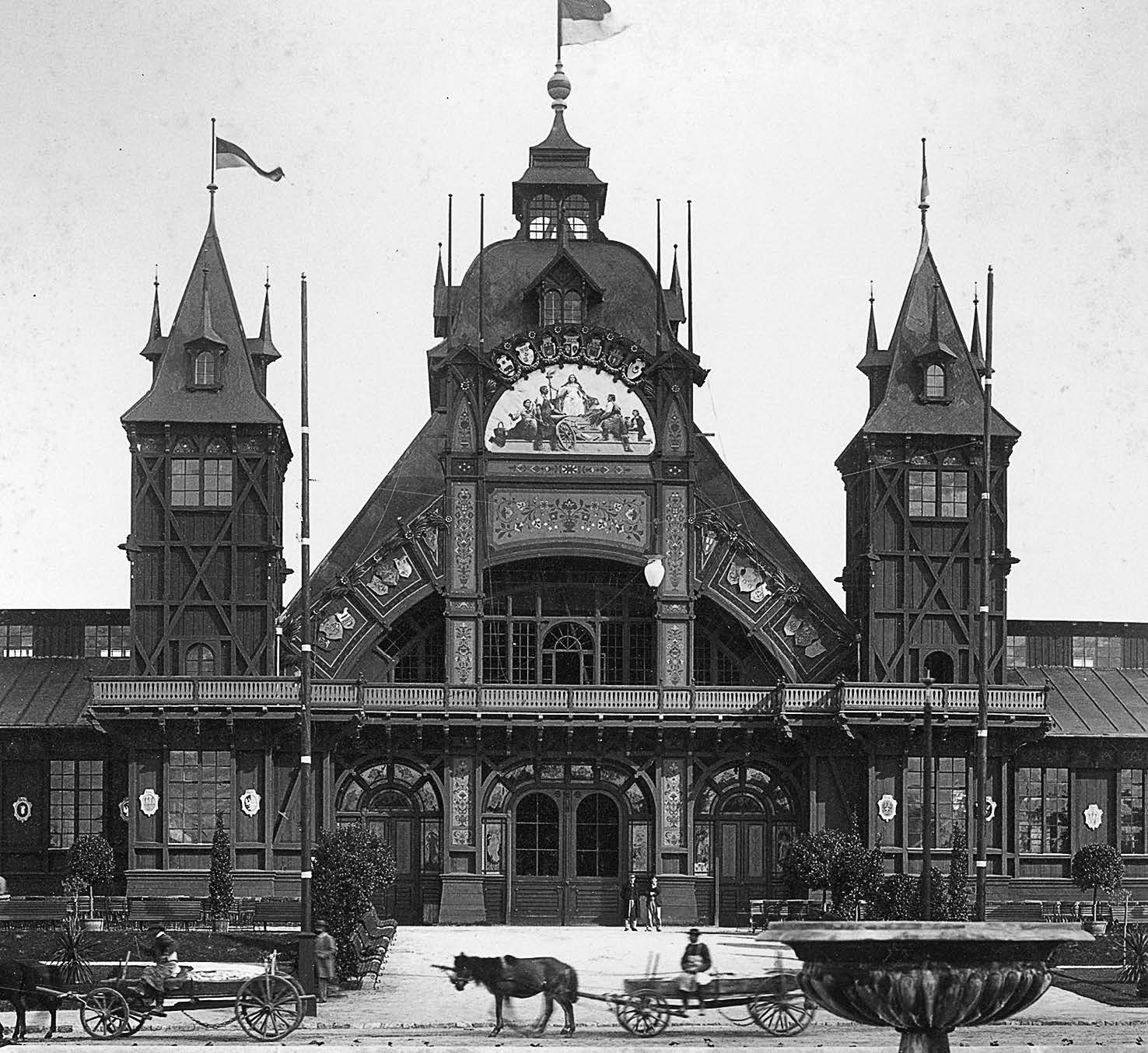
For the first time, the article examines in detail the life and work of Karel Boublík (1869–1925), a Lviv architect of Czech origin. In the years 1897–1914 he was the author of many residential buildings in Lviv. Boublík also led the Česká beseda in Lviv – the oldest Czech association in the world outside the Czechia, he was also an amateur actor and director. The work of Karel Boublík took an important place in the artistic life of Lviv at the end of the 19th and the beginning of the 20th century. Therefore, it is not only for the study of the architecture of the city that it is important and urgent to research, preserve and popularize the heritage of this artist. His personality and work have not yet been examined in detail in the intentions of art history and in his homeland, in the Czech Republic, Boublík is still unknown among experts. The purpose of the article is to find out the specifics of the architectural heritage of K. Boublík. The study is based on a comprehensive approach, using biographical and historical-cultural methods, including artistic analysis. Archival sources and information from the press at the time are an integral part of the study. Boublík’s buildings are an example of the architecture of the transition from historicism in its Neo-Baroque version to Art Nouveau and the second wave of historicism in 1909–1914, with elements of modernized historical styles. Its buildings were exceptional in their originality, with a special emphasis on sculptural decoration and metal ornaments. This architect’s tendency to highlight protruding spherical and prismatic forms has been demonstrated, with a sharp vertical accent of roofs, often pyramidal, with complex ends – with multi-level wavy and rounded attics, towers and dormers.
DOI: https://doi.org/10.31577/archandurb.2021.55.1-2.8

This work is licensed under a Creative Commons Attribution 4.0 International License